

Systematic Human Rights Abuse
- Details
- Written by: Blessing Tariro Makeyi
- Hits: 60
 Human Rights and Rule of Law in Zimbabwe: A Systematic Breakdown
Zimbabwe's decline from a nation with constitutional protections and an independent judiciary to one characterized by systematic human rights abuses represents one of the most troubling transformations in post-colonial Africa. The erosion of the rule of law has not happened by accident but through deliberate policies and actions by those in power who view legal constraints as obstacles to be overcome rather than principles to uphold.
The Gukurahundi: An Early Warning
The first major human rights catastrophe in independent Zimbabwe was the Gukurahundi, a campaign of mass killings in Matabeleland and parts of the Midlands from 1983 to 1987. The Fifth Brigade, trained by North Korean instructors and answering directly to Prime Minister Robert Mugabe, unleashed terror on civilian populations under the guise of hunting dissidents.
An estimated 20,000 people were killed through shootings, beatings, burnings, and starvation. Entire villages were destroyed, women were raped, and survivors were tortured. The government imposed curfews and restricted food supplies to affected areas, weaponizing hunger against civilian populations. Mass graves scattered across Matabeleland remain largely unexcavated, and the government has never acknowledged the full scale of the atrocities or held anyone accountable.
This early impunity established a pattern: political violence could be employed without consequences, and the state's monopoly on force would be used not to protect citizens but to terrorize them into submission.
The Judiciary: From Independence to Subservience
At independence, Zimbabwe inherited a legal system based on Roman-Dutch and English common law, with a judiciary that showed initial signs of independence. However, successive governments have systematically undermined judicial independence through intimidation, politically motivated appointments, and constitutional manipulation.
The turning point came in the early 2000s when judges who ruled against government land seizures faced death threats and violence. Chief Justice Anthony Gubbay was forced to resign in 2001 after being threatened. Other judges who demonstrated independence were similarly targeted, creating a climate of fear within the judiciary.
The government then packed the courts with loyalists. Appointments became overtly political, with legal credentials mattering less than demonstrated allegiance to the ruling party. The Constitutional Court and Supreme Court, meant to be bulwarks against government overreach, instead became instruments for legitimizing executive actions regardless of their legality.
Escalating Political Repression
- Details
- Written by: Tinashe Chihota
- Hits: 229
 Zimbabwe’s Escalating Political Repression
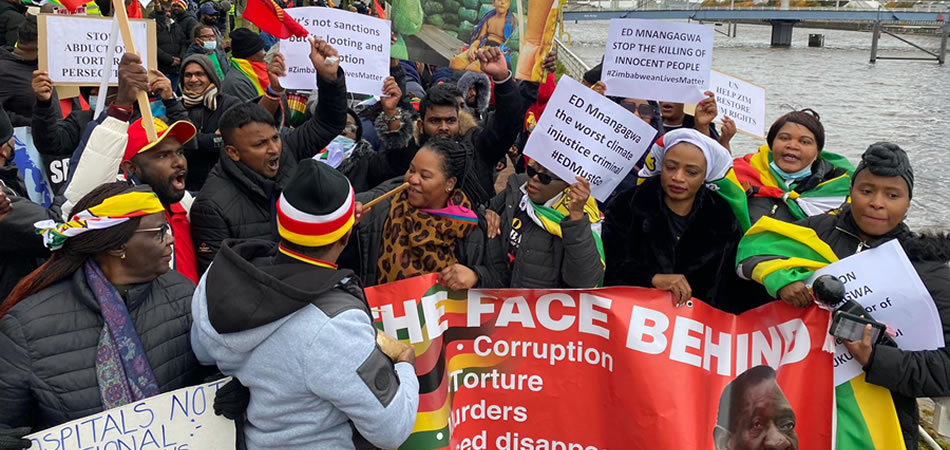
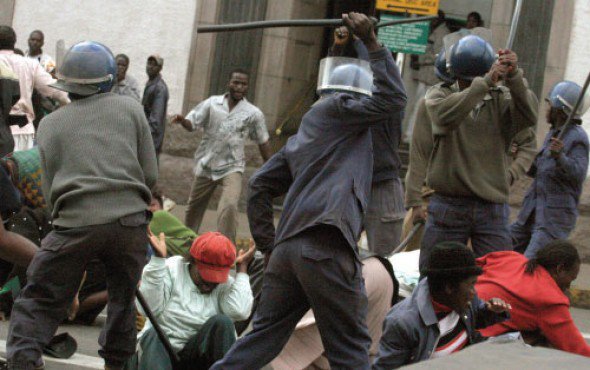
Zimbabwe is experiencing a wave of state-sponsored human rights violations, with opposition leaders, activists, journalists, and student leaders targeted in a systematic campaign of arbitrary arrests, abductions, torture, and intimidation. Recent incidents include the firebombing of SAPES Trust offices in Harare, abductions of ZINASU student leaders, raids on opposition figures’ homes and offices, and the transnational detention of opposition leader Job Sikhala in South Africa.
These actions are politically motivated, aimed at silencing dissent, restricting civic space, and intimidating individuals advocating for democratic reforms. Victims face violations of fundamental rights, including freedom of expression, peaceful assembly, political participation, and (most importantly) protection from torture.
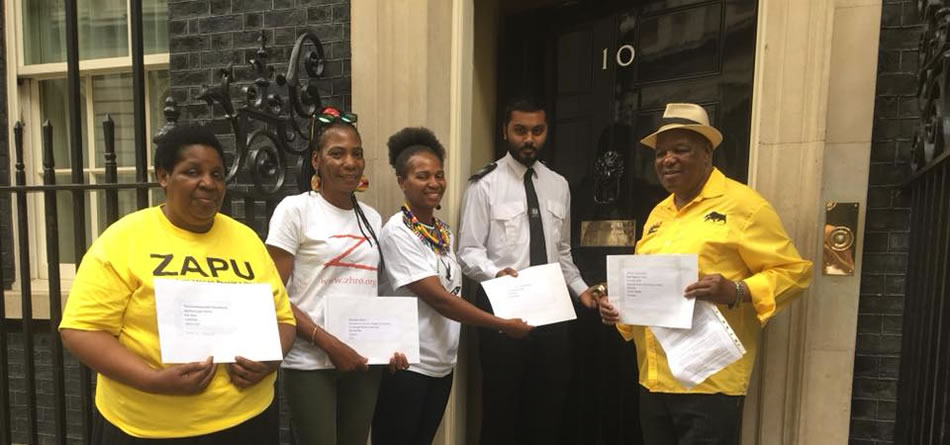
ZHRO condemns these abuses and calls on the Zimbabwean government to immediately cease harassment and politically motivated arrests. We urge regional and international human rights bodies to investigate these violations and hold perpetrators accountable, and we call on civil society organizations to continue documenting abuses and protecting activists.
The ongoing repression represents a serious threat to democracy and human rights in Zimbabwe, and international attention and accountability are urgently needed.
Furthermore, the founders of ZHRO wish to State:
"We urge all international nations who are accepting Zimbabwean nationals into their relevant asylum processes to recognise the Zimbabwean regime for what it has been concealing for decades - it has remained in power for 45 years under the 'Rule of the Jack Boot', through ruthless repression."
Zimbabwe in the Firing Line
- Details
- Written by: John Burke
- Hits: 317

No, this is not a new war - but it is an onslaught of sorts - from our local 'Yellow Dwarf' - Our Sun. A very large solar flare is on its way to Earth and NOAA scientists have produced this intensity map - and Zimbabwe is right in the middle!
So expect radio and GPS interference, mobile disruptions etc. see Dailymail - 11th Nov 2025
The sun erupted in a massive solar flare, the largest of the year, sending a wave of solar activity that could affect Earth starting on Tuesday. A powerful X5.1-class flare, capable of disrupting satellites, high-frequency radio and high-altitude flights, burst from the sun today. The flare caused a radio blackout across Europe and Africa around 5am ET, briefly affecting aviation, maritime, emergency, GPS, radar and satellite communications.
Space scientist Steph Yardley described the solar activity as 'not very common,' noting these extremely energetic particles from the sun are so strong that ground-based detectors can pick them up. 'There have been 75 recorded since 1942,' she posted on X. NOAA scientists are monitoring a possible coronal mass ejection (CME), a huge cloud of solar material and magnetic fields, moving at about 3,000 miles per second.
If it is headed for our planet, it could trigger a strong geomagnetic storm, disturbing Earth’s magnetic field overnight into Wednesday. If it is headed for Earth, it could trigger a strong geomagnetic storm, disturbing Earth’s magnetic field overnight into Wednesday. Auroras may appear as far south as Pennsylvania, Iowa, and Oregon. Power grids, GPS navigation, and HF radio communications could all be affected, NOAA shared in an alert.
Persecution in 2025
- Details
- Written by: Desire Munyaradzi KUNAKA with Chat GPT as Research Assistant
- Hits: 834
 A briefing on documented persecutions of activists in Zimbabwe during 2025 (covering Jan–Oct 2025, with the most important incidents, patterns, legal framing, and quick recommendations). I pulled reporting from human-rights groups and multiple news outlets so you can use this as a short briefing or expand into a timeline/report.
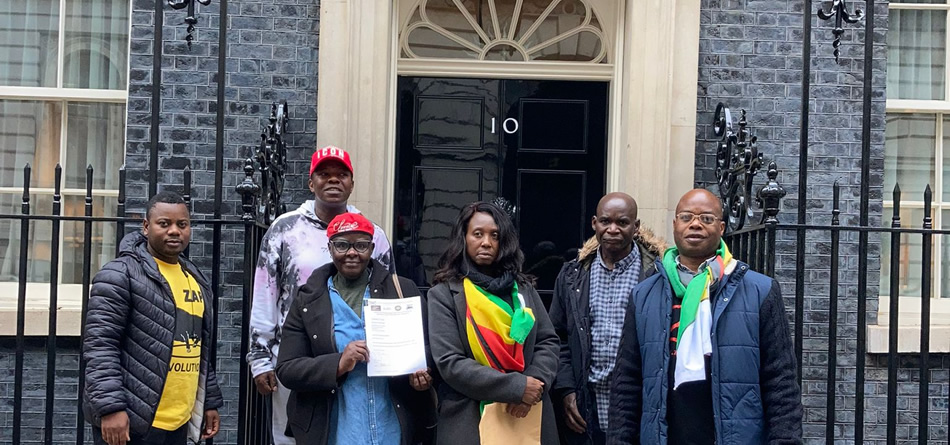
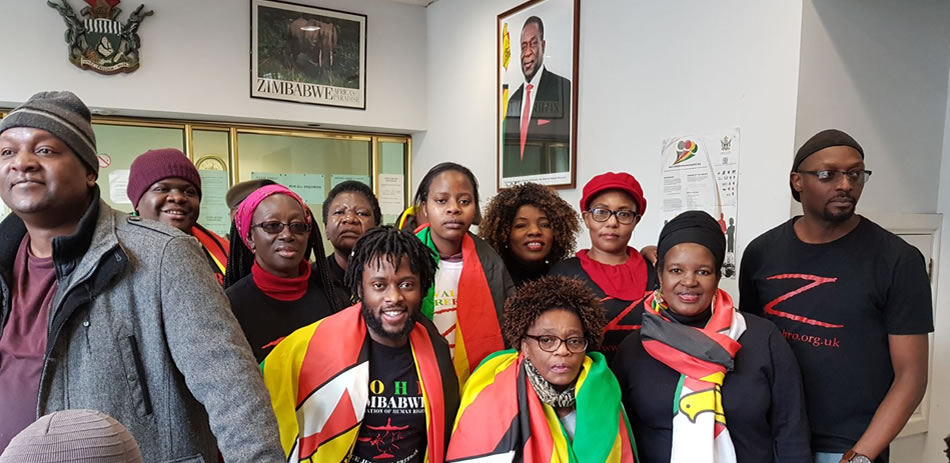
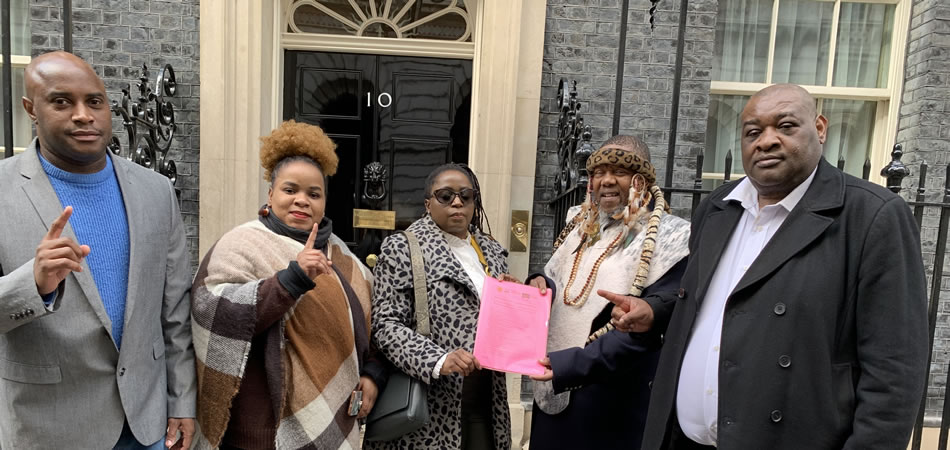
Photograph: from our meeting in Durham with Jenatry Muranganwa Chihota, Shepherd Yuda and myself - as reported in New Zimbabwe on 4th October 2025 Second Photo below: Full Meeting Participants
Executive summary
In 2025 Zimbabwean authorities continued a pattern of arrests, remands, and prosecutions targeting activists, journalists and protest organisers. Major actions in 2025 include (1) the arrest and prolonged detention of journalist Blessed Mhlanga (Feb 24 onward) for interviewing a critic of the president; (2) mass post-protest arrests around the 31 March antigovernment demonstrations with roughly 95–107 people detained; and (3) a wave of arrests/remands in October 2025 tied to planned marches and the prosecution of outspoken activists (including Godfrey “Madzibaba” Karembera). Human-rights organisations (HRW, Amnesty, CPJ) and international media have documented denials of bail, charges of “incitement” or “unlawful gathering,” and allegations of mistreatment. Human Rights Watch+2Al Jazeera+2
Page 1 of 41


