
 Human Rights and Rule of Law in Zimbabwe: A Systematic Breakdown
Zimbabwe's decline from a nation with constitutional protections and an independent judiciary to one characterized by systematic human rights abuses represents one of the most troubling transformations in post-colonial Africa. The erosion of the rule of law has not happened by accident but through deliberate policies and actions by those in power who view legal constraints as obstacles to be overcome rather than principles to uphold.
The Gukurahundi: An Early Warning
The first major human rights catastrophe in independent Zimbabwe was the Gukurahundi, a campaign of mass killings in Matabeleland and parts of the Midlands from 1983 to 1987. The Fifth Brigade, trained by North Korean instructors and answering directly to Prime Minister Robert Mugabe, unleashed terror on civilian populations under the guise of hunting dissidents.
An estimated 20,000 people were killed through shootings, beatings, burnings, and starvation. Entire villages were destroyed, women were raped, and survivors were tortured. The government imposed curfews and restricted food supplies to affected areas, weaponizing hunger against civilian populations. Mass graves scattered across Matabeleland remain largely unexcavated, and the government has never acknowledged the full scale of the atrocities or held anyone accountable.
This early impunity established a pattern: political violence could be employed without consequences, and the state's monopoly on force would be used not to protect citizens but to terrorize them into submission.
The Judiciary: From Independence to Subservience
At independence, Zimbabwe inherited a legal system based on Roman-Dutch and English common law, with a judiciary that showed initial signs of independence. However, successive governments have systematically undermined judicial independence through intimidation, politically motivated appointments, and constitutional manipulation.
The turning point came in the early 2000s when judges who ruled against government land seizures faced death threats and violence. Chief Justice Anthony Gubbay was forced to resign in 2001 after being threatened. Other judges who demonstrated independence were similarly targeted, creating a climate of fear within the judiciary.
The government then packed the courts with loyalists. Appointments became overtly political, with legal credentials mattering less than demonstrated allegiance to the ruling party. The Constitutional Court and Supreme Court, meant to be bulwarks against government overreach, instead became instruments for legitimizing executive actions regardless of their legality.
Cases with political implications are routinely decided in favor of the government. Opposition leaders arrested on dubious charges are denied bail for extended periods. Court orders favorable to government critics are simply ignored by state security forces, with no consequences for those who flout judicial authority. When courts become tools of oppression rather than arbiters of justice, the rule of law ceases to exist in any meaningful sense.
Political Violence and Intimidation
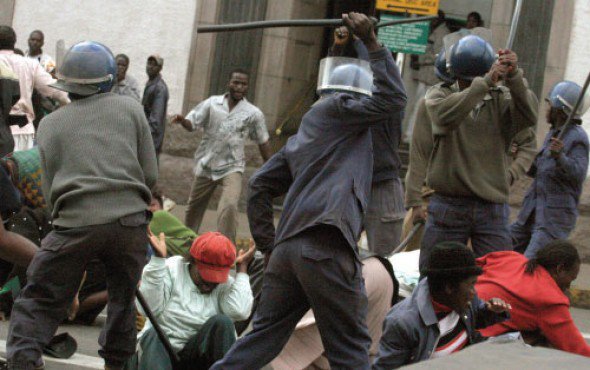
Political violence has been deployed systematically in Zimbabwe to maintain power and crush dissent. The pattern intensifies around election periods but persists throughout the political calendar as a means of social control.
The 2008 elections represented perhaps the most concentrated period of political violence. After losing the first round of presidential voting, the government unleashed a campaign of terror against opposition supporters. Hundreds were killed, thousands were beaten, and tens of thousands were displaced from their homes. Torture was widespread, with victims bearing permanent physical and psychological scars. Women were raped as a weapon of political intimidation. The violence was so severe that opposition leader Morgan Tsvangirai withdrew from the runoff election, citing the impossibility of a free and fair vote under such conditions.
This violence was not random or spontaneous. It was organized, with military and intelligence personnel coordinating attacks. Perpetrators operated with impunity, knowing they would face no legal consequences. Many victims could identify their attackers but had no recourse to justice because the very institutions meant to protect them were complicit in the violence.
The pattern has continued under the post-Mugabe government. In August 2018, the military shot and killed six protesters in Harare following disputed election results. In January 2019, security forces killed at least 17 people during protests over fuel price increases, with many more injured, raped, or tortured. These are not isolated incidents but part of a deliberate strategy to rule through fear.
Abductions, Torture, and Enforced Disappearances
A particularly sinister aspect of Zimbabwe's human rights situation is the use of abductions and torture against activists, journalists, and perceived government critics. Victims are typically seized by unidentified men, taken to unknown locations, and subjected to severe beatings, torture, and sexual violence before being dumped back in public spaces or remote areas.
These abductions serve multiple purposes: they punish the individual victim, they terrorize others who might consider activism or dissent, and the state maintains plausible deniability by using operatives without official identification. The message is clear—no one is safe, and the state can reach you anywhere.
High-profile cases include journalist Itai Dzamara, who was abducted in 2015 and has never been seen since despite court orders requiring the government to locate him. Comedian and activist Samantha Kureya was abducted and tortured in 2019. Opposition activists Peter Magombeyi and Cecilia Chimbiri were among many seized and brutalized. In most cases, no one is ever arrested or prosecuted for these crimes.
The torture methods employed are brutal and designed to inflict maximum pain and humiliation: severe beatings with batons and sjamboks, falanga (beating the soles of feet), sexual violence and rape, forced drinking of sewage or urine, electric shocks, and prolonged stress positions. These are not the actions of rogue elements but reflect institutional practices within state security forces.
Suppression of Freedom of Expression and Assembly
Zimbabwe's Constitution nominally guarantees freedom of expression and assembly, but in practice these rights are systematically violated. Laws ostensibly designed for legitimate purposes are weaponized against critics and activists.
The Public Order and Security Act requires police permission for public gatherings and has been used to ban virtually all opposition and civil society gatherings while allowing ruling party events to proceed freely. Police routinely deny permission for peaceful protests or impose impossible conditions, effectively nullifying the constitutional right to assembly.
Journalists face arrest, harassment, and violence for reporting stories unfavorable to the government. The media landscape is heavily controlled, with state media functioning as propaganda outlets and independent outlets facing constant pressure. Journalists are arrested under laws criminalizing "publishing falsehoods" or "undermining authority of the president," charges so vague they can be applied to almost any critical reporting.
Social media activists have become particular targets. Citizens are arrested for tweets, WhatsApp messages, and Facebook posts criticizing the government. The mere act of sharing information about protests or human rights violations can result in prosecution under broadly worded criminal laws.
Civil society organizations face restrictions through burdensome registration requirements and threats of deregistration for activities the government deems problematic. NGOs working on human rights or governance issues are labeled "regime change agents" and face constant harassment.
Economic Violence and Social Rights
Human rights extend beyond civil and political rights to include economic and social rights, and Zimbabwe's government has failed catastrophically in this domain as well. While this failure partly reflects policy incompetence, it also involves deliberate weaponization of economic resources for political purposes.
Food aid has been distributed along partisan lines, with opposition supporters being denied assistance during times of drought and hunger. Access to agricultural inputs, subsidies, and land has been allocated based on political loyalty rather than need or merit. This constitutes a form of economic violence where the state uses its control over resources essential for survival as a tool of political control.
The right to healthcare has been undermined by chronic underfunding and corruption. Public hospitals lack basic medicines and equipment, forcing those who can afford it to seek private care while the poor suffer and die from treatable conditions. Healthcare workers, when they strike for livable wages, face arrest and intimidation.
The right to education has similarly been compromised. Schools lack resources, teachers are paid poverty wages, and poor families cannot afford fees for public education. The brain drain of educated professionals represents not just an economic loss but a failure to create conditions where people can enjoy their social and economic rights in their own country.
Impunity: The Core of the Problem
Running through all of Zimbabwe's human rights failures is a single thread: impunity. Those who commit human rights violations—whether government officials, security force members, or ruling party operatives—face no consequences. This impunity is not incidental but structural.
Investigations into political violence go nowhere. Perpetrators are not arrested. On the rare occasions when someone is charged, cases are withdrawn or courts deliver acquittals despite overwhelming evidence. Meanwhile, victims have no meaningful access to justice or reparations.
This impunity extends to corruption, which itself is a human rights issue when public resources that should fund schools, hospitals, and infrastructure are stolen by elites. High-level corruption is endemic, yet prosecutions are rare and selective, targeting political rivals rather than genuinely addressing the problem.
International human rights mechanisms have condemned Zimbabwe's abuses repeatedly, but the government shows contempt for international law and norms. It withdraws cooperation with UN special rapporteurs, ignores recommendations from human rights treaty bodies, and dismisses criticism as neocolonial interference.
The Militarization of Politics
The 2017 coup that ended Mugabe's rule represented not a democratic transition but the formalization of military control over politics. Military figures occupy key government positions and have embedded themselves in the economy through control over mining, agriculture, and other sectors.
This militarization has profound implications for human rights and rule of law. Military personnel are not trained in democratic governance or respect for civil liberties; they are trained in command structures and use of force. When military logic dominates politics, dissent becomes treason, critics become enemies, and force becomes the default response to political challenges.
The military's role in human rights abuses is well documented, yet it operates above the law. Soldiers and intelligence operatives who shoot protesters or torture activists are shielded from accountability by the very institution that should be subordinate to civilian authority.
International Dimensions
Zimbabwe's human rights crisis has regional and international dimensions. Millions of Zimbabweans have fled to neighboring countries, particularly South Africa and Botswana, creating refugee and migration pressures. Many face xenophobic violence in host countries while unable to safely return home.
Regional bodies like the Southern African Development Community have been largely ineffective, prioritizing regime stability over human rights. This reflects a broader pattern where African governments are reluctant to criticize each other's human rights records, creating a culture of impunity at the continental level.
Western governments have imposed targeted sanctions on individuals responsible for human rights abuses and undermining democracy, though the effectiveness of these measures is debated. The government cynically blames all of Zimbabwe's economic problems on sanctions while rejecting the reforms that would lead to their removal.
The Human Cost
Behind these systemic failures are individual stories of suffering. Families who will never know what happened to loved ones who were disappeared. Torture survivors living with permanent disabilities and trauma. Children who cannot attend school because their activist parents were arrested or killed. Communities living in fear, where people are afraid to speak freely even in their own homes.
The psychological toll is immeasurable. Multiple generations have now grown up knowing only authoritarian rule, violence, and economic hardship. Trust in institutions has been destroyed. The social fabric that holds communities together has been torn by political violence that has neighbor against neighbor.
 Prospects for Reform
Meaningful improvement in Zimbabwe's human rights situation requires fundamental changes that those currently in power show no interest in implementing. These would include genuine judicial independence with judges appointed on merit rather than loyalty, security sector reform to establish civilian control and accountability, repeal of repressive laws and alignment of all legislation with constitutional rights, prosecution of human rights violators regardless of their political connections, institutional reforms to strengthen checks and balances, and a truth and reconciliation process to address historical abuses.
The obstacles to such reforms are formidable. The current elite benefit from the status quo and have much to lose from genuine accountability. The security forces that keep them in power would face prosecution for past crimes if the rule of law were truly established. There is no indication of political will for meaningful change.
Conclusion
Zimbabwe's human rights crisis and collapse of rule of law are not natural disasters or accidents of history. They result from deliberate choices by those who prioritize power retention over the rights and welfare of citizens. Every abduction, every beating, every rigged court case, every denied permit for peaceful assembly represents a choice to rule through fear rather than consent.
The international community's attention to Zimbabwe has waned since the dramatic events of 2017, but the situation has not improved and in many ways has worsened. The victims of human rights abuses deserve more than sympathy; they deserve solidarity and sustained pressure on their government to respect the rights enshrined in both Zimbabwe's Constitution and international law.
Until those who commit human rights violations face consequences, until the judiciary can function without political interference, until citizens can speak, organize, and vote without fear, Zimbabwe will remain a state where law is a weapon rather than a shield, where power flows from violence rather than democratic legitimacy, and where the government exists not to serve its people but to dominate them.