
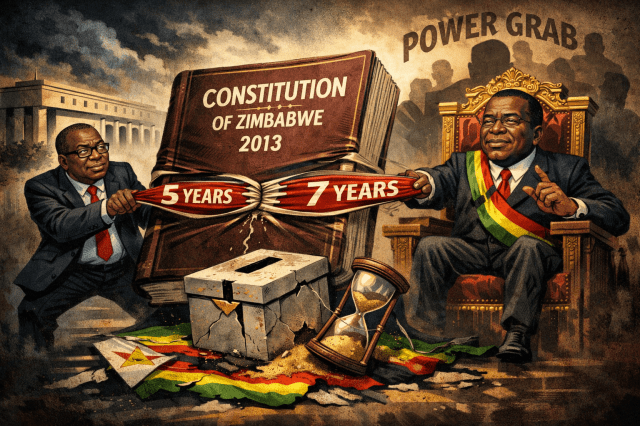
 Constitutional Capture in Zimbabwe:
ZANU-PF's Manipulation of Legal Frameworks
Introduction
Constitutional capture refers to the process by which political actors manipulate constitutional and legal frameworks to consolidate power, undermine democratic institutions, and entrench authoritarian rule. In Zimbabwe, the Zimbabwe African National Union-Patriotic Front (ZANU-PF) has systematically employed constitutional capture since independence in 1980, transforming what should be a foundation for democratic governance into an instrument of political domination.
This document examines the mechanisms, evolution, and consequences of ZANU-PF's constitutional capture, analyzing how the party has manipulated successive constitutions to maintain its grip on power across more than four decades.
Historical Context: From Lancaster House to the 2013 Constitution
The Lancaster House Constitution (1980-2013)
Zimbabwe gained independence under the Lancaster House Constitution, a compromise document negotiated in London in 1979. While it included protections for white minority property rights and a brief period of reserved parliamentary seats for whites, it also provided Robert Mugabe and ZANU-PF with a constitutional framework they would later exploit. Key early manipulations included the constitutional amendments of the 1980s that removed reserved seats for whites, abolished the Senate, and critically, created an executive presidency with enhanced powers. The 1987 Unity Accord between ZANU and ZAPU consolidated single-party dominance, and the subsequent constitutional amendment that made Mugabe executive president concentrated unprecedented power in one office.
Failed Reform and the 2000 Constitutional Referendum
In 2000, ZANU-PF attempted to pass a new constitution that would have further entrenched presidential powers and provided legal cover for land seizures. However, the Movement for Democratic Change (MDC) led a successful campaign against the referendum, marking the first electoral defeat for ZANU-PF. This rejection did not deter the regime; instead, it accelerated extrajudicial land invasions and intensified political repression.
The 2013 Constitution: Promise and Betrayal
The 2013 Constitution emerged from the Government of National Unity period (2009-2013) following disputed and violent elections. It promised significant democratic reforms, including term limits for the presidency, devolution of power, an independent prosecutorial authority, and strengthened constitutional oversight bodies. The constitution was approved by referendum with overwhelming support. However, implementation became the primary mechanism of constitutional capture. ZANU-PF systematically undermined progressive provisions through selective enforcement, legislative manipulation, and judicial subversion.
Mechanisms of Constitutional Capture
1. Judicial Manipulation
The judiciary has been perhaps the most critical site of constitutional capture. ZANU-PF has employed multiple strategies to ensure judicial compliance, including political appointments to senior judicial positions, particularly the Constitutional Court and Supreme Court; intimidation and forced retirement of independent judges; and the manipulation of the Judicial Service Commission to ensure loyalty to the regime. Notable examples include the 2001 forced resignation of Chief Justice Anthony Gubbay following intimidation by war veterans, and the controversial appointment of judges with known ZANU-PF connections. The result has been a judiciary that routinely issues rulings favorable to ZANU-PF, particularly in electoral disputes and cases involving opposition politicians.
2. Electoral System Manipulation
While the 2013 Constitution mandated an independent Zimbabwe Electoral Commission (ZEC), ZANU-PF has systematically undermined its independence through partisan appointments of ZEC commissioners, often with military or intelligence backgrounds; control over voter registration processes and the voters' roll; manipulation of constituency delimitation to favor ZANU-PF strongholds; and restrictions on independent election observation. The constitutional requirement for free and fair elections has been rendered largely symbolic through these mechanisms, combined with violence and intimidation in rural areas where ZANU-PF maintains traditional authority structures.
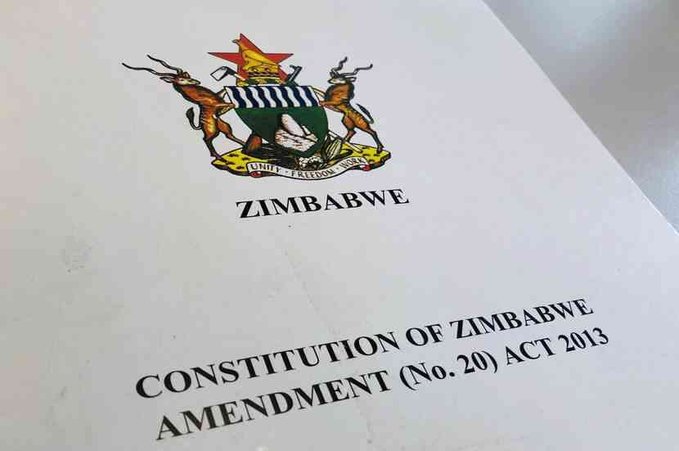 3. Selective Implementation of Constitutional Provisions
ZANU-PF has strategically chosen which constitutional provisions to implement and which to ignore. Progressive provisions that remain largely unimplemented include meaningful devolution of power to provincial and local councils; full operationalization of the National Peace and Reconciliation Commission; gender quotas in parliament as stipulated; and alignment of existing laws with the new constitution, particularly regarding security legislation. Conversely, provisions that enhance executive power or restrict opposition activity have been enthusiastically enforced. The government has cited constitutional provisions to justify arrests of opposition members and civil society activists, while ignoring constitutional protections for freedom of assembly and expression.
4. Amendment Through Parliamentary Dominance
ZANU-PF has used its parliamentary majority to amend the constitution in ways that consolidate power. Notable amendments include Amendment No. 1 in 2017, which removed the requirement for vice presidents to be elected and allowed the president to appoint them directly; and Amendment No. 2 in 2021, which among other changes, gave the president power to appoint the Chief Justice and judges without meaningful oversight, extended judges' retirement age to allow Mugabe-era appointees to remain, and weakened the Public Protector's office. These amendments have effectively reversed many democratic gains of the 2013 Constitution, reconcentrating power in the executive while maintaining a facade of constitutional governance.
5. Security Sector Entrenchment
Despite constitutional provisions for civilian authority over the military, ZANU-PF has maintained de facto military involvement in politics. The military leadership has repeatedly stated it will only accept leadership from those with liberation war credentials, effectively excluding opposition parties. Military and intelligence officials hold key positions in civilian administration, including provincial governorships and critical ministries. The 2017 military intervention that removed Mugabe and installed Mnangagwa demonstrated that ultimate power resides not in constitutional institutions but in the security establishment, which remains loyal to ZANU-PF rather than the constitution.
Consequences of Constitutional Capture
Democratic Erosion
The most obvious consequence has been the hollowing out of democratic institutions. Elections remain regular but not genuinely competitive. Parliament exists but lacks meaningful oversight capacity. Constitutional bodies have been created but rendered ineffective through partisan appointments and resource constraints. This has created what scholars call 'competitive authoritarianism'—a system that maintains democratic forms while ensuring opposition parties cannot genuinely compete for power. The constitution becomes a tool of legitimation rather than limitation of power.
Economic Decline
Constitutional capture has contributed significantly to Zimbabwe's economic collapse. The rule of law uncertainty created by selective constitutional enforcement has deterred investment. The lack of property rights protection, despite constitutional guarantees, has particularly affected agriculture and mining sectors. Unchecked executive power has facilitated corruption and economic mismanagement. The constitutional promise of devolution has not materialized, leaving local governments without resources to develop their economies. This concentration of economic power in Harare has perpetuated regional inequalities and stifled entrepreneurship.
Social Fragmentation
The weaponization of the constitution has deepened social divisions. Constitutional provisions on citizenship have been used to exclude opposition leaders like Roy Bennett and Tendai Biti. Selective prosecution under constitutional provisions has created a climate of fear, particularly among activists and journalists. The failure to implement the National Peace and Reconciliation Commission properly has prevented healing from historical atrocities like Gukurahundi. Constitutional protections for minority languages and cultures remain unimplemented, perpetuating cultural marginalization.
International Isolation
Zimbabwe's constitutional capture has contributed to ongoing international sanctions and diplomatic isolation. Western nations, particularly the United States and European Union, maintain targeted sanctions on ZANU-PF officials and entities. Regional organizations like SADC have struggled to address Zimbabwe's democratic deficits while maintaining regional solidarity. This isolation has limited access to international financing and development assistance, further compounding economic difficulties and creating a vicious cycle where economic hardship strengthens authoritarian control.
Resistance and Constitutional Contestation
Despite ZANU-PF's dominance, various actors have contested constitutional capture through civil society litigation, with organizations like Zimbabwe Lawyers for Human Rights challenging unconstitutional actions in court; opposition political mobilization, particularly by the MDC and its successors; independent media and documentation of constitutional violations; and international advocacy through regional and international human rights mechanisms. These efforts have achieved limited success within a captured system. Court victories are often ignored or appealed endlessly. Electoral gains are nullified through manipulation or violence. Media outlets face closure or harassment. Yet these resistance efforts maintain constitutional consciousness and document abuses for potential future accountability.
Comparative Context: Zimbabwe in Regional Perspective
Zimbabwe's constitutional capture shares features with other African cases while having unique characteristics. Similar patterns exist in Uganda, where Yoweri Museveni has repeatedly amended the constitution to remove term limits and consolidate power; Rwanda, where constitutional changes extended Paul Kagame's rule despite human rights concerns; and Tanzania, where constitutional protections have been eroded under the guise of development and security. However, Zimbabwe's case is distinctive in several respects. The sophistication of legal manipulation is particularly advanced, maintaining constitutional formalism while gutting substance. The deep penetration of security services into civilian governance exceeds most regional comparisons. The economic collapse resulting from governance failures has been more severe than comparable cases.
The Mnangagwa Era: Continuity of Constitutional Capture
The 2017 transition from Mugabe to Emmerson Mnangagwa raised hopes for reform, particularly given the 'new dispensation' rhetoric and promises of economic revival. However, constitutional capture has continued and in some ways intensified under Mnangagwa. The 2021 constitutional amendments concentrated power in ways Mugabe never achieved. The violent suppression of protests in 2019 and 2020 demonstrated continued disregard for constitutional rights to assembly and expression. The continued manipulation of electoral processes in 2023 showed no substantive reform of democratic institutions. Indeed, Mnangagwa's era has revealed that constitutional capture is systemic rather than personal—it serves ZANU-PF's institutional interests rather than any individual leader. The military's role in installing Mnangagwa confirmed that constitutional authority remains subordinate to armed force in Zimbabwe's political order.
Conclusion: The Future of Constitutionalism in Zimbabwe
Constitutional capture in Zimbabwe represents a sophisticated form of authoritarianism that maintains democratic appearances while ensuring autocratic outcomes. ZANU-PF has demonstrated remarkable adaptability in using legal instruments to achieve political ends, creating what might be termed 'authoritarian legalism.' The 2013 Constitution, despite its progressive provisions, has proven insufficient to prevent democratic backsliding. This underscores that constitutions alone cannot guarantee democracy—they require independent institutions, political will, and civic engagement to function as intended. Breaking the cycle of constitutional capture will require fundamental changes, including genuine security sector reform to establish civilian supremacy; judicial independence protected through non-partisan appointment mechanisms; electoral reform with truly independent administration; implementation of unfulfilled constitutional provisions, particularly devolution; and international pressure combined with domestic mobilization.
Until these structural changes occur, Zimbabwe's constitution will remain what it has become—a tool of control rather than liberation, a means of legitimating rather than limiting power, and a testament to how even well-crafted legal frameworks can be subverted when political will favors authoritarianism over democracy. The Zimbabwean case offers crucial lessons for constitutional design and democratic transitions globally: constitutions must be actively defended; institutional independence requires structural guarantees beyond paper protections; and constitutional democracy is a continuous struggle, not a one-time achievement. For Zimbabwe itself, the path forward requires not just constitutional reform but a fundamental transformation of political culture and power relations that have characterized the post-independence era.