
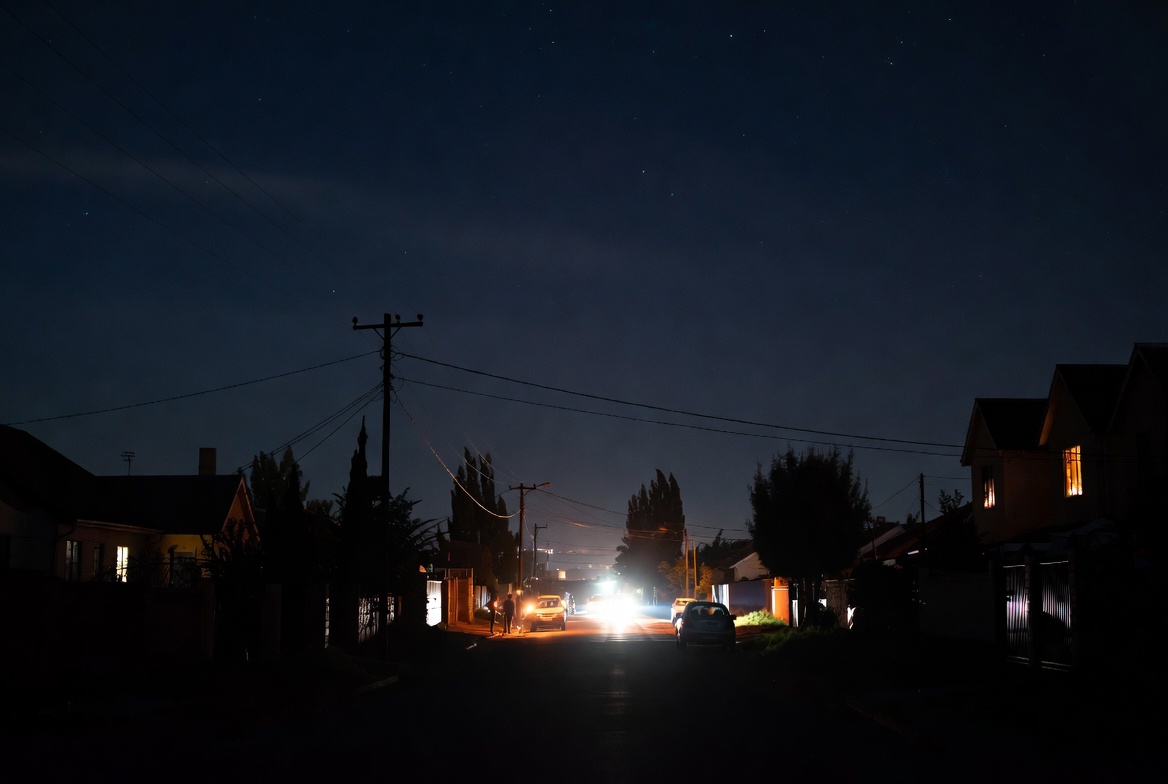
 ZIMBABWE'S CRITICAL INFRASTRUCTURE: A Single Interdependent System in Collapse
Electricity, Water and Sanitation — A Diagnostic Briefing
Prepared by Sun Earth Energy Ltd, in association with Urbium Research Ltd
https://sun-earth-energy.com | https://urbium.org | https://chp4.org
Executive Summary
This briefing sets out documented evidence that Zimbabwe's electricity, water and sanitation systems should be understood not as three separate crises but as a single interdependent infrastructure system in decline. Chronic underinvestment, deferred maintenance and the diversion of utility revenue — evidenced in the Auditor-General's own reporting — have left the national grid without the redundancy that modern power systems require, such that a single substation fault has, on more than one occasion, taken down supply across an entire city or the national network. The same pattern of deferred maintenance and diverted funds runs through Harare's water and sewage systems, sustaining a public-health risk that has already produced one of the worst cholera epidemics in African history and continues to generate outbreaks today. Because electricity, water treatment and sewage pumping are physically interdependent, the collapse of one system degrades the others in ways that compound rather than simply add up. This paper is diagnostic. It sets out the evidence and the mechanism of failure; it does not make recommendations for UK Government policy.
About this Briefing
This briefing is prepared by Sun Earth Energy Ltd, in association with its research affiliate Urbium Research Ltd. The author has practised across site engineering, development project management, property finance and energy consultancy since the mid-1970s, including delivered work on water treatment infrastructure and power-station ancillary works, and has since 1985 provided energy-efficiency advisory work spanning industry and the social-housing sector. The firm has made formal submissions to the UK Department for Energy Security and Net Zero (DESNZ) on heat-network regulation, and has developed the "Integrated Urban Metabolism" (IUM) framework, which treats a city's waste, water, heat and power systems as a single interconnected organism rather than as separate sectors. That framework is the analytical lens applied in this briefing. The author is also active campaigner with a long-standing interest in Zimbabwean civic and governance issues.
1. The Electricity Grid: Deficit and Diversion
Zimbabwe's national electricity system operates with a chronic structural deficit. Recent reporting places domestic generation at roughly 866 MW against a national daily requirement of around 2,400 MW, with the country's principal sources — the Hwange thermal station, Kariba hydro station and independent power producers — contributing approximately 639 MW, 184 MW and 43 MW respectively. The resulting gap has produced daily load-shedding reaching 16 hours or more in many areas, and reports of outages stretching to 17–18 hours, or several days, are commonplace.
This deficit is not simply a story of drought at Kariba or ageing plant at Hwange, though both are real factors. A 2019 forensic report commissioned by the Auditor-General and conducted by PricewaterhouseCoopers found that millions of US dollars had been siphoned from the state utility, ZESA, through fraudulent schemes including overpayment for transformers, procurement of obsolete equipment, and diversion of funds toward executive expenditure. Subsequent Auditor-General reports have continued to identify financial irregularities and contract mismanagement. One frequently cited case is a solar power project awarded in 2015 that never materialised, with the contracted party reportedly paid despite the work not being carried out and the allocated funds never satisfactorily accounted for.
The practical effect is that funds which utility economics would direct toward transformer replacement, plant rehabilitation or import contracts to cover the generation gap have instead been diverted, leaving the transmission and distribution network without the redundancy that would normally contain a local fault.
2. Cascading Failure: When One Substation Takes Down a Country
The consequence of that lack of redundancy is not hypothetical. In January 2024, a fault at the Insukamini 330kV substation in Bulawayo — described by ZESA as a busbar fault triggering a system surge — caused a countrywide loss of power on the national grid, disrupting business, traffic-signal operation and daily life across the country from a single point of failure.
In 2025, a fire at the Highfield substation in Harare damaged critical switching equipment and rendered several neighbouring substations — Willowvale, Beatrice, Workington and Glen Norah — inoperable, cutting supply to a wide swathe of southern Harare, including Southerton, Old Ardbennie, Rugare, Westwood, Waterfalls, parts of Mbare and the Highfield suburb itself, while ZETDC arranged temporary cross-feeds from adjacent substations to partially restore service. These are precisely the single-point-of-failure cascades that infrastructure engineering literature identifies as characteristic of networks that have lost the maintenance and redundancy margin they were designed with.
3. Water and Sanitation: The Parallel Collapse
The same pattern — deferred maintenance, diverted revenue, and a widening gap between designed capacity and actual demand — runs through Harare's water and sewage infrastructure. Harare's piped water network was designed in the 1960s for a much smaller population and now produces approximately 704 megalitres a day against demand estimated at 800–1,300 megalitres, a gap attributed by researchers to obsolete infrastructure, population growth, climate stress, and government and municipal corruption.
Human Rights Watch has documented that city budget rules require water revenue to be reinvested into system maintenance, but that officials themselves have acknowledged the money is diverted elsewhere, leaving essentials such as water-treatment chemicals underfunded. The consequence has been recurrent contamination events: in 2024, Harare health authorities detected e-coli, giardia, salmonella typhi and vibrio cholera in city water sources, following the collapse of a sewer pipeline whose repair tender had reportedly gone missing, discharging raw sewage into Lake Chivero, the city's principal water source.
This is not a new phenomenon. The 2008–09 cholera epidemic killed an estimated 4,200 people and infected more than 100,000 — the worst outbreak of its kind recorded in Africa in fifteen years — and Human Rights Watch found in 2013 that the conditions which allowed it to flourish persisted unchanged. A peer-reviewed geospatial study of the 2018–19 Harare cholera outbreak, published in PLOS Neglected Tropical Diseases and conducted with World Bank researchers, found a measurable relationship between cholera risk and proximity to the sewer network, consistent with sewer bursts contaminating the adjacent piped water supply — a direct, documented mechanism by which decaying sanitation infrastructure actively poisons its own substitute.
4. Why These Are One Problem, Not Three
The academic literature on critical infrastructure treats electricity, water, wastewater and telecommunications as an interdependent network rather than as parallel, separable systems, on the basis that failure in one sector routinely triggers cascading effects across the others. This is not an abstract point in Zimbabwe's case. Water pressure and treatment throughput depend on electrically powered pumps; when a substation and its associated booster pumps lose power, downstream water pressure falls directly as a result — a mechanism modelled explicitly in recent civil-engineering work on cascading failure in interdependent power and water networks. In a system already running at the edge of capacity, an electricity outage is not merely an inconvenience layered on top of a water crisis; it is one of the water crisis's own causal inputs.
This is the central argument of the Integrated Urban Metabolism framework referenced above: that a city's waste, water, heat and power systems function as a single organism, and that treating them as unconnected policy silos — as separate ministries, separate utilities, separate donor programmes — systematically understates the risk that failure in any one of them carries for all the others.
5. A Regional, Not Uniquely Zimbabwean, Pattern
It is worth noting that grid fragility of this kind is not unique to Zimbabwe. Nigeria's national grid recorded its first system-wide collapse of 2026 on 23 January, with generation falling to zero megawatts nationwide — the third such collapse inside a month once a late-December 2025 incident is counted — attributed by commentators to unpaid debts, ageing transmission infrastructure and decades of underinvestment rather than to any single unpredictable event. In South Africa, energy-security commentary has similarly noted that the country's communications infrastructure is now entirely dependent on its electricity system, such that grid failure would represent a single point of failure with consequences cascading into water supply, given that pumped water delivery in cities such as Tshwane has already failed during electricity outages, leaving several reservoirs to run dry.
The comparison matters diagnostically: it indicates that infrastructure interdependency and the risk of cascading failure are a structural feature of maintaining modern grids generally, which corruption and state capacity failures make acute rather than create from nothing. Zimbabwe's case is distinguished less by the existence of the underlying engineering vulnerability — which is common to interconnected modern infrastructure everywhere — than by the scale of documented revenue diversion away from the maintenance programmes that would otherwise contain it.
6. A Note on Diaspora Investment Appeals
Diaspora investment forums of the kind currently being promoted to the Zimbabwean community in the United Kingdom are not, in themselves, evidence of anything beyond an intention to attract capital and expertise; this is a normal instrument of development finance used by many governments. What this briefing does establish, on the documented record set out above, is that the same institutions now seeking diaspora capital and technical partnership have an audited history of failing to account for infrastructure funds already collected from domestic ratepayers and taxpayers. Any appraisal of such an appeal, by the diaspora or by third parties, is better informed by that documented record than by the appeal's own framing. See Tweets Update and the original in the early hours of 7th July 2026.
Conclusion: What Modern Civilisation Actually Needs
Electricity, potable water and functioning sewage disposal are not amenities of modern life; they are the physical preconditions for public health, economic activity and social order, and — as the evidence above demonstrates — they are mechanically interdependent rather than separable. A grid that loses its redundancy margin because maintenance funds have been diverted elsewhere does not fail in isolation: it degrades water treatment, compromises sewage pumping, and reintroduces the conditions for waterborne disease that a modern state exists in large part to prevent. Zimbabwe's documented record over the past two decades is a case study in what happens when the institutions charged with maintaining that interdependent system are systematically deprived of the resources to do so. This briefing has set out that record; it leaves the question of what response — by government, by donors, or by the diaspora itself — is warranted to others better placed to weigh it.
Addendum (8 July 2026): National Blackout, 6 July, Confirms the Pattern
This briefing was completed before a live illustration of its central argument occurred. At 18:24 on Monday 6 July 2026, ZESA Holdings reported a nationwide blackout after a major fault on the Warren-Alaska 330kV transmission line caused Zimbabwe to lose its interconnections with neighbouring regional utilities, which in turn tripped local generation offline due to voltage instability and under-frequency. In other words, a single transmission-line fault removed power from the entire country, not merely a city, as in the Insukamini and Highfield precedents cited above.
ZESA's own technical update states that restoration efforts began at 19:01, drawing supply from South Africa's Eskom, the Kariba hydro station, Hydro Cahora Bassa in Mozambique, and three units at Hwange, with most bulk supply points restored by 22:00; work continued on the remaining Hwange units and on repairs to the Warren substation, which supplies parts of Harare. Independent reporting by Reuters, carried by Engineering News and CNBC Africa, corroborates ZESA's account of the timing, cause and restoration route, and situates the event within a longer pattern of outages worsened by ageing infrastructure and foreign-currency shortages that have limited the country's ability to pay for electricity imports.
| This event adds a further dimension to the interdependency argument set out above: Zimbabwe's own generation and transmission system is now so fragile that national supply depends on the health of interconnections with Eskom, Cahora Bassa and (at times) Zambia's grid. A domestic fault does not merely cut domestic supply; it exposes the extent to which Zimbabwe's electricity security has become contingent on regional neighbours absorbing the shortfall at short notice — a dependency that carries its own risk, given that Eskom's own generation fleet has intermittently faced comparable strain. The blackout occurred less than 48 hours before a diaspora investment forum in London was scheduled to invite technical and financial partnership from the Zimbabwean community in the UK; readers may draw their own conclusions from the juxtaposition. |
References
Auditor-General of Zimbabwe / PricewaterhouseCoopers (2019) forensic report into ZESA, as reported in Zawya, 'ZESA singlehandedly destroying Zimbabwe' (2024) and Energy Central (2024).
The Zimbabwean, 'Power deficit or mismanagement: Examining Zimbabwe's energy crisis and the cost of inaction' (2024).
The Herald (Zimbabwe), 'Substation fault hits national grid' (5 January 2024).
iHarare, 'Highfield Zesa Substation Catches Fire Plunging Some Parts Of Harare Into Darkness' (2025); NewZimbabwe.com, 'Power outages in parts of Harare after Highfield substation catches fire' (2025).
Human Rights Watch, 'Troubled Water: Burst Pipes, Contaminated Wells, and Open Defecation in Zimbabwe's Capital' (2013); 'Zimbabwe: Water and Sanitation Crisis' (2013); 'Zimbabwe: Dire Lack of Clean Water in Capital' (2021).
Zimbabwe Situation, 'Corrupt Harare chefs behind shocking ecological disaster' (2024); 'Inside Harare's worsening water crisis' (2023).
Ayling, Milusheva, Kashangura, Hoo, Sturrock, Joseph, Withey & Wunder, 'A stitch in time: The importance of water and sanitation services (WSS) infrastructure maintenance for cholera risk. A geospatial analysis in Harare, Zimbabwe', PLOS Neglected Tropical Diseases (2023), DOI 10.1371/journal.pntd.0011353.
British Geological Survey, 'Harare's clean drinking water challenge' (2025); Mason, P.R., 'Zimbabwe experiences the worst epidemic of cholera in Africa', J. Infect. Dev. Ctries. 3 (2009).
Guardian (Nigeria), 'National grid suffers first collapse of 2026' (24 January 2026); The ICIR, 'National grid records second collapse in 2026' (27 January 2026); WithinNigeria, 'National Grid Collapse Nigeria: The Crisis That Will Not End' (July 2026).
EcoFlow, 'Impacts of Grid Collapse in South Africa', citing Stellenbosch University Security Institute for Governance and Leadership commentary.
ASCE OPEN: Multidisciplinary Journal of Civil Engineering, 'Cascading Failure Propagation and Perfect Storms in Interdependent Infrastructures' (2025); ScienceDirect, 'Empirical patterns of interdependencies among critical infrastructures in cascading disasters' (2023).
ZESA Holdings, public technical update, 'Latest Technical Update on National Power Restoration as at 06/07/26 2200hrs' (7 July 2026).
Reuters, carried by Engineering News, 'Zimbabwe restores power after nationwide blackout, ZESA says' (7 July 2026); CNBC Africa, same report (7 July 2026).
iHarare, 'ZESA Breaks Silence On Fault Behind Zimbabwe's Nationwide Blackout On Monday Night' (7 July 2026); The Zimbabwe Mail, 'Zimbabwe Restores Electricity Following Nationwide Blackout Triggered by Transmission Line Fault' (7 July 2026); allAfrica.com, 'Nationwide Blackout Plunges Zimbabwe Into Darkness As ZESA Scrambles to Restore Power' (7 July 2026).