Walking Is Not a Crime: ZHRO's Walk for Freedom Targeted by Automated Attack
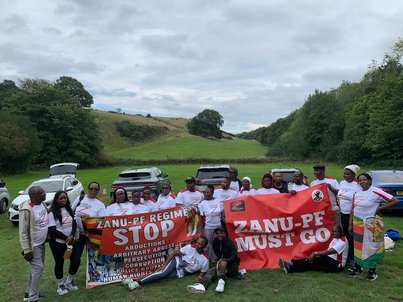
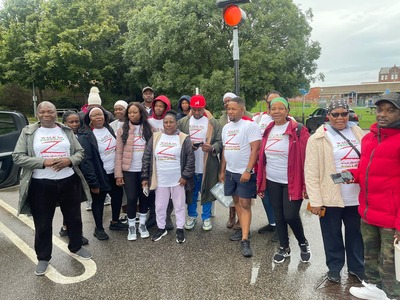
For ten years, members of the Zimbabwe Human Rights Organisation have walked for freedom, from Brighton to Hampton Court, through the streets of Leeds and Blackburn, and most recently along the coast from Scarborough to Whitby. We walk peacefully, in the open, to keep the plight of Zimbabwe's people in view. It now appears that someone has gone to considerable trouble to make that work look unwelcome.
Our website lets readers rate each article from 1 to 5. Few of our readers ever used it. Most of our articles have only a handful of ratings, many of them from our own members. Then we noticed something very different happening to a particular group of articles.
Thirty articles, about 6,400 fake votes
Our database shows that 30 articles have each received between 100 and 267 votes, almost all of them the lowest possible score. In total, around 6,400 such votes have been cast. No other article on our site has ever received more than nine.
The targeted articles span our entire history, from "ZHRO – Getting Started", our first article in 2016, through our 2017 walk report, the 2021 petitions to Downing Street, our 2022 approaches to the FCDO, BBC, AU and SADC, and our 2023 articles on the right to vote, to this year's Walk for Freedom reports and the petition we delivered to 10 Downing Street in May. They have one thing in common: each deals with the Walk for Freedom, our petitions, elections, or the abuses of ZANU-PF.
Our records show how many votes each article received but not when they were cast, so we cannot say how long this has been going on. What we can say is that someone has worked systematically through ten years of our archive, choosing precisely the articles that speak most directly about Zimbabwe's government.
How it was done
Our server logs show the attack in action. Between 18 and 22 September 2026, a single Walk for Freedom article received more than 5,700 automated vote submissions, at times almost one per second.
It began from one computer. In just twenty seconds, that machine submitted 28 votes while pretending to be 22 different devices: Windows, Mac and Linux, running Chrome, Firefox, Edge, Opera and Safari. A real computer cannot be a Windows PC and a Mac in the same second. The disguise was generated by software.
The method then changed. Almost every submission came from a different internet address, routed through a proxy network designed to hide its true origin and to defeat our website's protection against repeated voting. But the addresses were far less varied than they seemed: nearly all came from just five or six blocks of addresses. Not one claimed to be a mobile phone, although most of our real readers visit on their phones.
These same address blocks appear on all thirty targeted articles in our database, going back to 2016.This is one operation, not thirty coincidences.
Our response
When the attack became apparent, UK-based members of ZHRO added 5-star votes to some of the recent articles. We mention this openly: those votes are easily told apart from the attack and do not change the picture. We have since switched voting off altogether, preserved our server records and database, and reported the matter to the Foreign, Commonwealth and Development Office.
This was not a disgruntled reader. It was an organised, resourced and persistent operation, aimed at ZHRO's peaceful campaigning over a whole decade. We cannot say from the records alone who is responsible, and we will not claim more than the evidence shows. Zimbabweans can judge for themselves who has an interest in making a human rights organisation look unpopular, and who has long experience of rigging votes.
We draw one lesson from this. Nobody spends this much effort discrediting work that nobody reads. Our walks, our petitions and our writing are being noticed. That is a reason to continue, and the next Walk for Freedom will go ahead. We invite every supporter to join us.
Scarborough to Whitby, along the Cinder Track Saturday 12th September 2026
1. Introduction
On Saturday 12th September 2026, 25 members and supporters of the Zimbabwe Human Rights Organisation (ZHRO) UK gathered in the car park of Sainsbury's, Falsgrave Road, Scarborough, to undertake a sponsored "Walk for Freedom" — a 21.8-mile (34.9 km) walk along the Cinder Track, the former trackbed of the Scarborough to Whitby railway, finishing at Battery Parade, Whitby.
It is also worth reminding ourselves that the Zimbabwe Vigil itself, thanks to Patson Muzuwa, was formed on the 12th September 2002 - so this Walk for Freedom S2W is on the 24th anniversary of that important diaspora event!
2. Building the Partnership with Sainsbury's
The walk's starting point — the Sainsbury's superstore car park on Falsgrave Road — was secured only after a period of correspondence between ZHRO and Sainsbury's head office.
Initial approach made to Sainsbury's CEO's office, which referred ZHRO to the Community Division.
The Community Division put ZHRO in touch with local Scarborough store management — Mark (Store Manager) and Chris (Community Champion/Officer).
A pre-event site visit was made the week before the walk, during which a donation of 32 bottles of water for the walkers was arranged with the store.
In addition, permission was granted for the 5 cars of the support group [and for those from far away] could stay within the Car Park for upto 12 hours - again thanks to the Local Sainsbury's.
3. The Day: Assembly and Departure
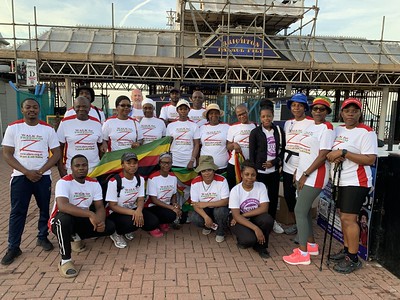
Walkers began assembling in the Sainsbury's car park from 8:00 am. Rain had been forecast, and from around 8:30 am it duly arrived — but spirits were not dampened. Around 20 plastic ponchos were distributed, and the group made the most of the conditions with photographs, singing and drumming while the final arrivals gathered.
Why Every Young Person Must Understand the System Before They Can Defend It.
There is a dangerous myth that politics is for old men in suits, for lawyers, for people with grey hair and long titles. Young people are told, directly or indirectly, to stay in their lane to focus on school, on hustling, on “apolitical” ambition. Meanwhile, the decisions that will shape the next fifty years of their lives are being made in parliaments, cabinets, and constitutional committees they were never taught to read. This is not an accident. An uninformed youth is a convenient youth. A generation that does not know its constitution cannot tell when that constitution is being gutted. A generation that cannot name its representatives cannot hold them accountable. Silence is not neutrality it is surrender by default.
Democracy Dies Quietly, Not Loudly Coups make headlines. But most erosions of democracy do not look like tanks in the street. They look like a clause quietly amended in a bill few people read. They look like an independent commission “restructured” until it has no teeth. They look like a chairperson removed through an administrative memo instead of due process. By the time the public notices, the damage is already law. This is why civic literacy cannot be optional for young people. If you do not know what your constitution protects your right to assemble, to speak, to be governed by term limits, to have an independent judiciary you will not recognise the moment those protections are being dismantled in front of you.
What “Knowing Your Politics” Actually Means It is not enough to know who the president is. Real political literacy means:
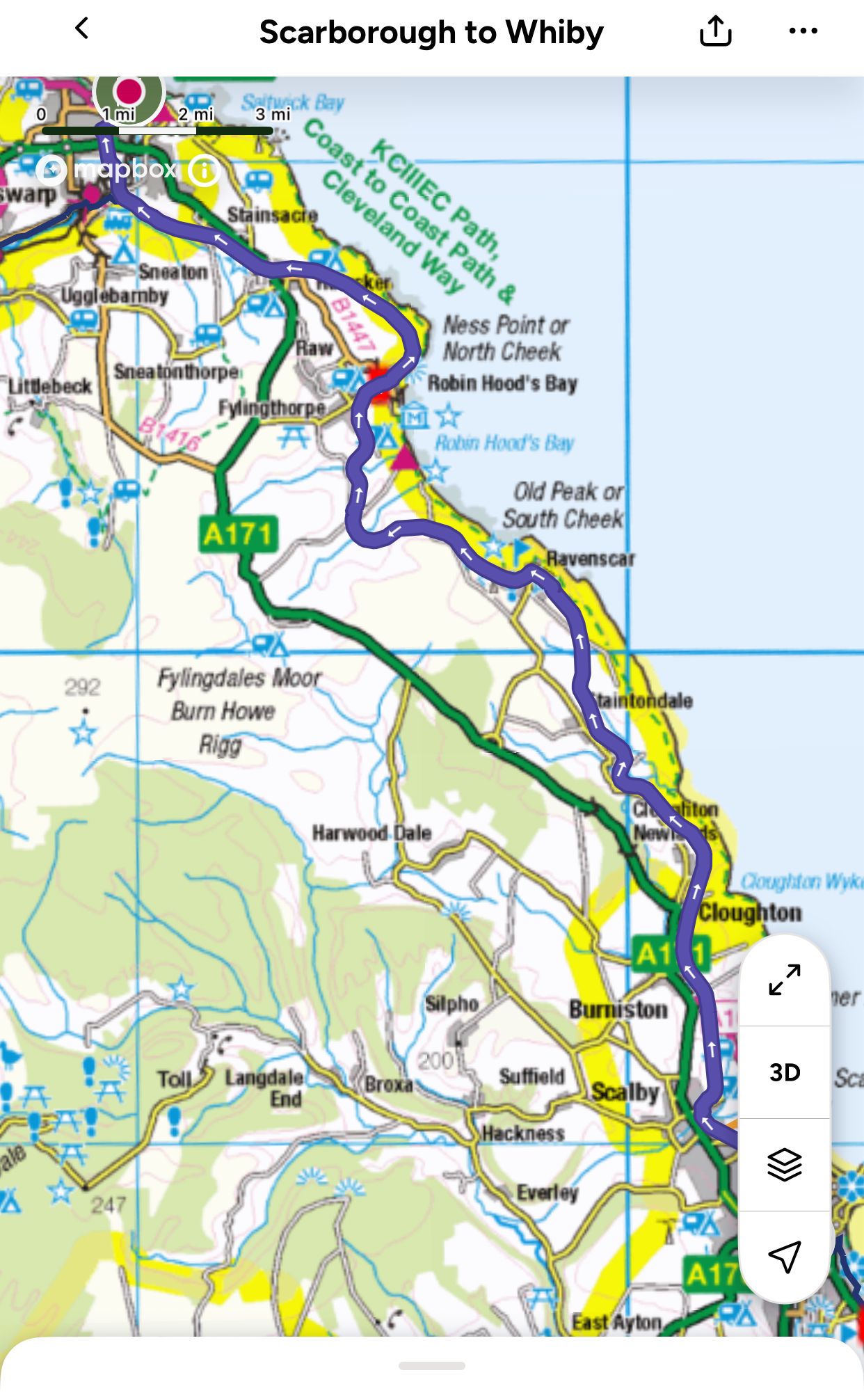
First Scarborough to Whitby Walk for Freedom — 12 September 2026
People Are Not Procedures.
On Saturday 12 September 2026, ZHRO takes its Walk for Freedom north but not for the first time, following the old railway line and coastal path between Scarborough and Whitby. It's in our 2026 calendar of walks, and comes just weeks after our flagship 100km+ Brighton to Hampton Court walk, completed on 16 August- [see link] — itself marking ten years since ZHRO was founded on 22 October 2016 AND Walking for Freedon. {See route HERE}
Why Scarborough to Whitby
A large number of ZHRO's members and supporters have been placed across the North of England during their asylum process, often far from the network of community and support built up around our southern walks. This route is our another step toward a permanent Northern presence — bringing the Walk for Freedom to where so many of our people already are.
The route itself follows a mostly flat gently undulating path along the disused railway line and Cleveland Way, taking in Ravenscar, Robin Hood's Bay, and the dramatic North Yorkshire coastline before finishing in Whitby — a fitting stretch for walkers of a wide range of fitness levels, and a chance to combine gentle exercise with fresh sea air and good company.
What the walk stands for
Every ZHRO Walk for Freedom carries the same message: #tiripachirangano — "kure kure," far away — a tribute to those still walking, still displaced, still waiting for change at home in Zimbabwe. This walk continues that tradition while also being, simply, a good day of walking, food, and fellowship by the sea.
Join us
Whether you can join for the full route or just a section, all walkers are welcome. To register your interest or find out more, get in touch with any of our walk coordinators:
Mellisa Marewangepo – 07389 185151
Melody Magejo – 07749 0913486
Dickson Chikwizo – 07482 324517
Josephine Jenje-Mudimu – 07749 895 989
You can also support ZHRO's work directly at walk.zhro.org.uk, with all funds payable to ZHRO Ltd.
ZHRO Ltd — Zimbabwe Human Rights Organisation. A Zimbabwean diaspora-centric charity marking ten years of walking for freedom in 2026.
New Update: We have compiled a list of the intermadiate "WAYPOINTS" along the OS Online mapping LINK{As above but repeated here - CLICK HERE}
Getting the ZHRO family to Brighton for the 10-year anniversary was, in itself, its own small odyssey. Participants converged from across the country — Leicester, Manchester, Stockton-on-Tees, Wolverhampton, Southampton, Oxfordshire, Chesterfield, Worthing, and beyond — a reminder of just how far the Walk for Freedom's reach has grown over a decade.
The logistics were compounded by a very practical challenge: distributing the full run of ZHRO 10 Year Walk for Freedom T-shirts, which had arrived by FedEx the previous Monday (10 August) — 23kg of them. A spreadsheet was set up to track sales (£15 per shirt) alongside separate contributions toward food and other costs (£25 each), so we could keep an accurate record of who'd paid, who still owed, and what had been banked.
The plan had been simple enough on paper: gather at Brighton Pier for 5:00am on Saturday 15th, setting off at 5:30am sharp. Reality, as ever, had other ideas.
Now we fully understand tha Mr Masimba Mavaza needs to keep his job with Zanu PF - so here is our 100% accurate, list of people taking part or supporting the 2026 - 10 year Anniversary walk: ready?
Rashiwe Bayisayi, Stanford Biti, John Burke, Francisca Chiduku, Justin Prince Chihurani, Dickson Chikwizo, Elizabeth Chitengo, Tanya Daka, Rosaline Dzidzwa, Anna Katsande, Shackleton Machingura, Phyllis M Magejo, Henry Makambe, Blessing T Makeyi, Genius K Mamwadhu, Mellisa Marewangepo, Panganai Mauzinyu, Mandy Mubaiwa, Roselyne Mubayiwa, Mary Blanton Mugabe, Felistas W Munemo, Felicia W Munemo, Patson Muruwa, Sindiso Ndlovu, Velisiwe Ndlovu, Chipo Parirenyatwa, Michelle Rwatiringa, Jambaya Samuel
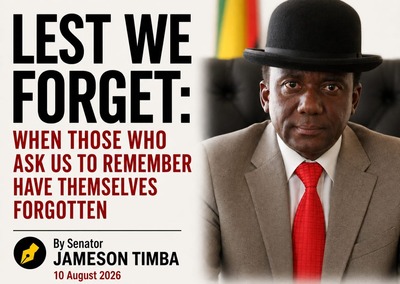
LEST WE FORGET: WHEN THOSE WHO ASK US TO REMEMBER HAVE THEMSELVES FORGOTTEN
10 August 2026
This year's National Heroes Day commemorations are being held under a particularly poignant theme:
“Lest We Forget.”
Those words are ordinarily an invitation to a nation to remember.
To remember the young men and women who abandoned schools, universities, jobs and families to join the liberation struggle. To remember those who crossed borders into uncertainty. To remember those who were imprisoned, tortured, maimed or killed. To remember those who lie in marked graves, unmarked graves and distant lands.
But in Zimbabwe today, “Lest We Forget” carries a painful irony.
Because the greatest danger confronting us is not that the people of Zimbabwe have forgotten.
It is that those governing Zimbabwe appear to have forgotten.
They have forgotten what the liberation struggle was about.
What Did They Fight For?
Our heroes did not fight merely to replace a white ruling elite with a black ruling elite.
Brighton Pier over 100km {65 miles} to London (Hampton Court Railway Station) 15th–16th August 2026 Meet at 5:00am (or earlier) – do not be late!
This year marks our 10th Anniversary Walk for Freedom — and we want it to be our biggest and best yet!
With just over 2 weeks to go, we urgently need to confirm numbers so we can organise: Talk to our Walk Organising Group members: Phylis M Magejo; Josephine Jenje-Mudimbu; Rashiwe Bayisayi; Henry Makambe; Patson Muzuwa; Samuel Jambaja; Dickson Chikwizo; Justin Prince and John Burke all on the relevant Whats Up Platforms. Plus many uncredited who help with accomodations on the Friday 14th August so that we can meet at 5:00am - including Sis Chipo!
Cooked food along the route
Drinks; Water, Tea, Coffee or Soup
Transport along the way – for those tired legs/feet - injuries or cramp!
Help?advice with Accomodation for the 5:00am meet time
Every step we walk, and every pound raised, helps in the fight to end human trafficking and modern slavery. Let's make this 10th Anniversary one to remember — walk with us, wear the shirt, and be part of the story.
Sign up today — spaces and T-shirt sizes are limited!
Additional Donations are welcome too – for those not able to attend this year
Click on the Walk for Freedom Journey points schedule to enlarge it
Every dictatorship needs an embassy. This one has a diaspora instead.
Walk past the Zimbabwean High Commission in any Western capital and you'll find a building. Flags, a crest, a reception desk. What you won't find is anyone inside who speaks for the millions of Zimbabweans who left because that government made staying impossible.
That's the gap ZIMBASSY fills.
Not a building. Not a bureaucracy. Not a single leader ZANU-PF's courts can capture, recall, or intimidate into silence — the way they gutted the CCC through the Tshabangu affair. ZIMBASSY is a distributed embassy: diaspora voices, documentation, and pressure, organised around the one thing Harare's embassies can never represent — the truth about what's happening back home.
While the official embassies host garden parties for Zanu-PF loyalists and process land-allocation paperwork for the party faithful, ZIMBASSY has spent 2026 doing the actual work of representing Zimbabweans abroad: documenting CAB3, Zimbabwe's attempted constitutional power-grab; recording testimony from journalists harassed for reporting it; putting the UK Parliament's own criticism of the bill on the public record; and giving diaspora voices — from Downing Street protests to personal testimony — a platform the regime cannot switch off.
The diaspora sends home an estimated $2.4 billion a year — the single largest prop under Zimbabwe's economy. In return, the government that drove them out won't even guarantee them healthcare when they visit. ZIMBASSY exists because representation should not be conditional on remittances.
This is what an embassy looks like when it belongs to the people instead of the party.
Join ZIMBASSY. Because the real Zimbabwe didn't leave — it multiplied.
ZANU PF's "Investment Forum" Meets the [real] Diaspora at 429 The Strand
By ZHRO / Constitution Defenders Forum / ROHR — London, 10 July 2026
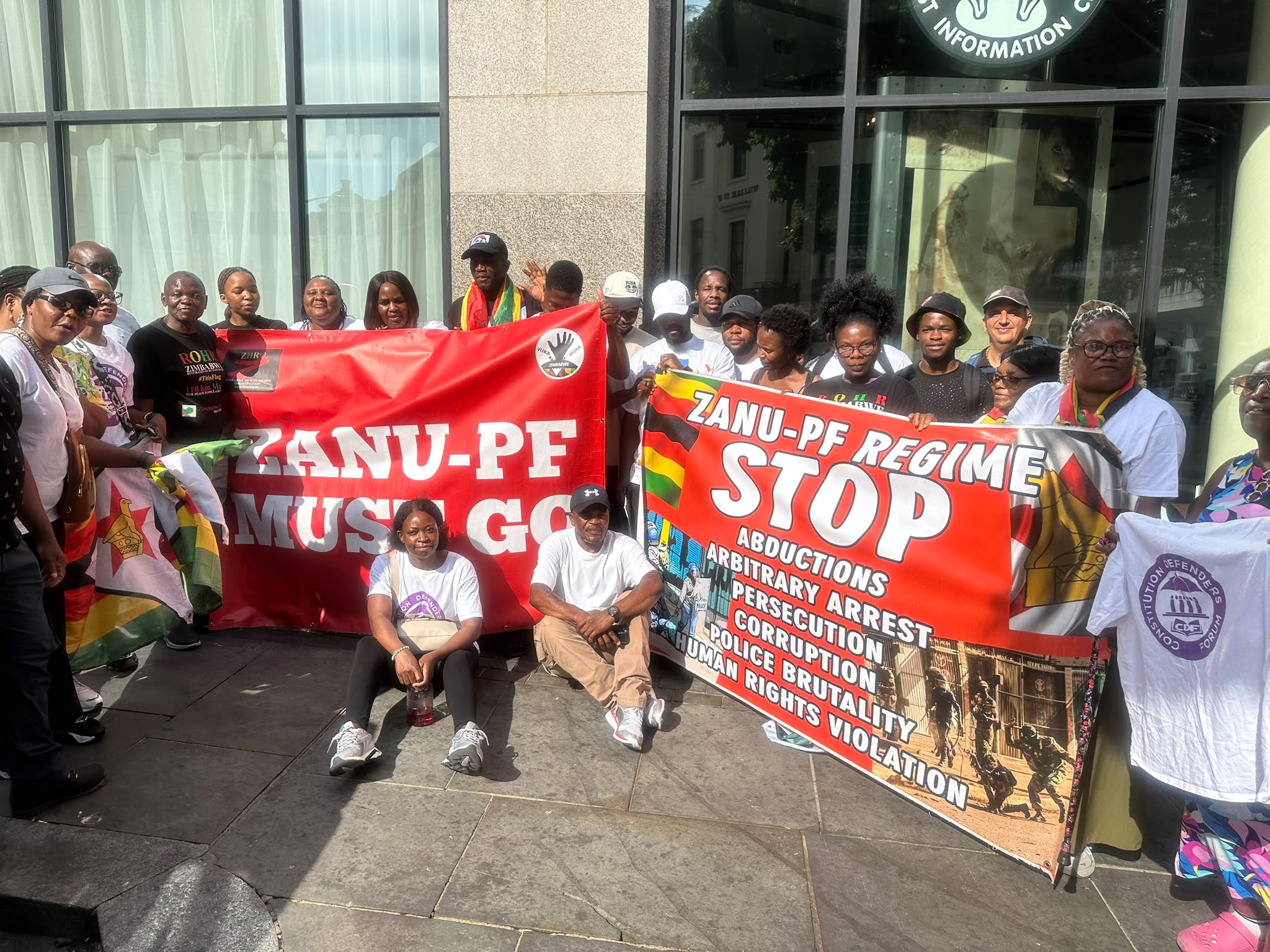
Three days after Emmerson Mnangagwa put his signature to the Constitution of Zimbabwe Amendment (No. 3) Act, the regime's embassy in London tried to sell investors on Zimbabwe. Outside, on the pavement, the diaspora explained why that pitch doesn't survive contact with the facts.
Two events, one address
Friday 10 July 2026 saw two things happen at 429 The Strand on the same afternoon, under the same roof, and neither made sense without the other.
Inside, the Zimbabwe Diaspora Business Forum – London, billed under the theme "Leveraging Diaspora Expertise for Sustainable Development" and fronted by the Financial Markets Indaba and CBZ Holdings, ran from 17:00 to 20:00. The invitation promised a "structured platform" connecting diaspora capital with Zimbabwe's "priority development projects."
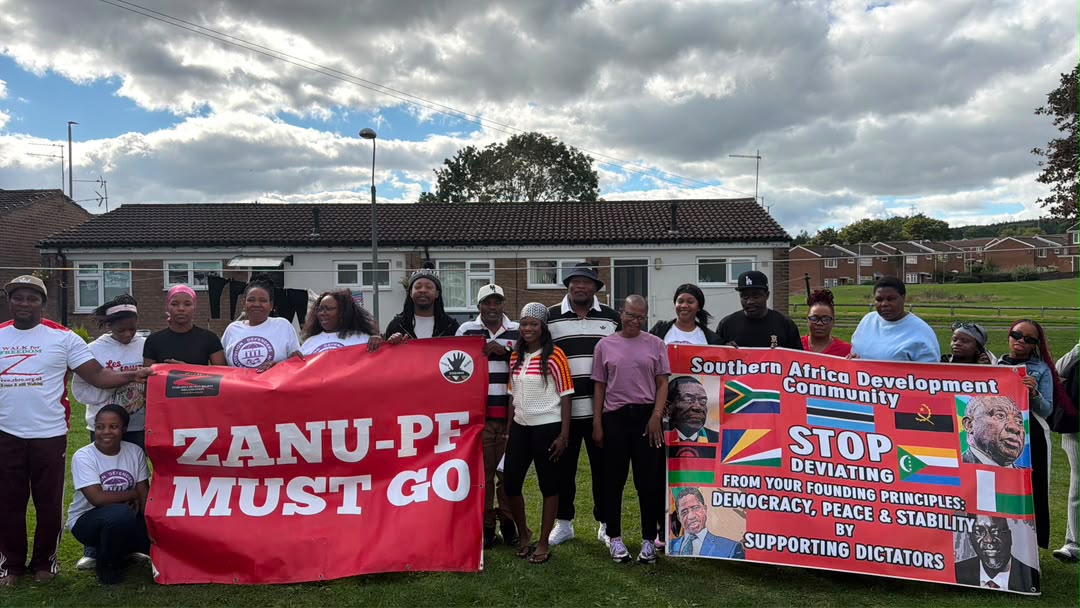
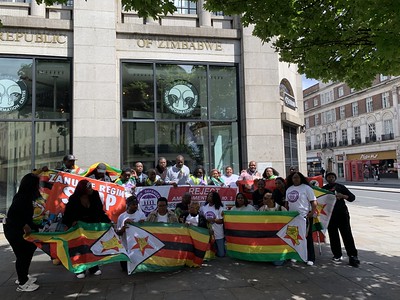
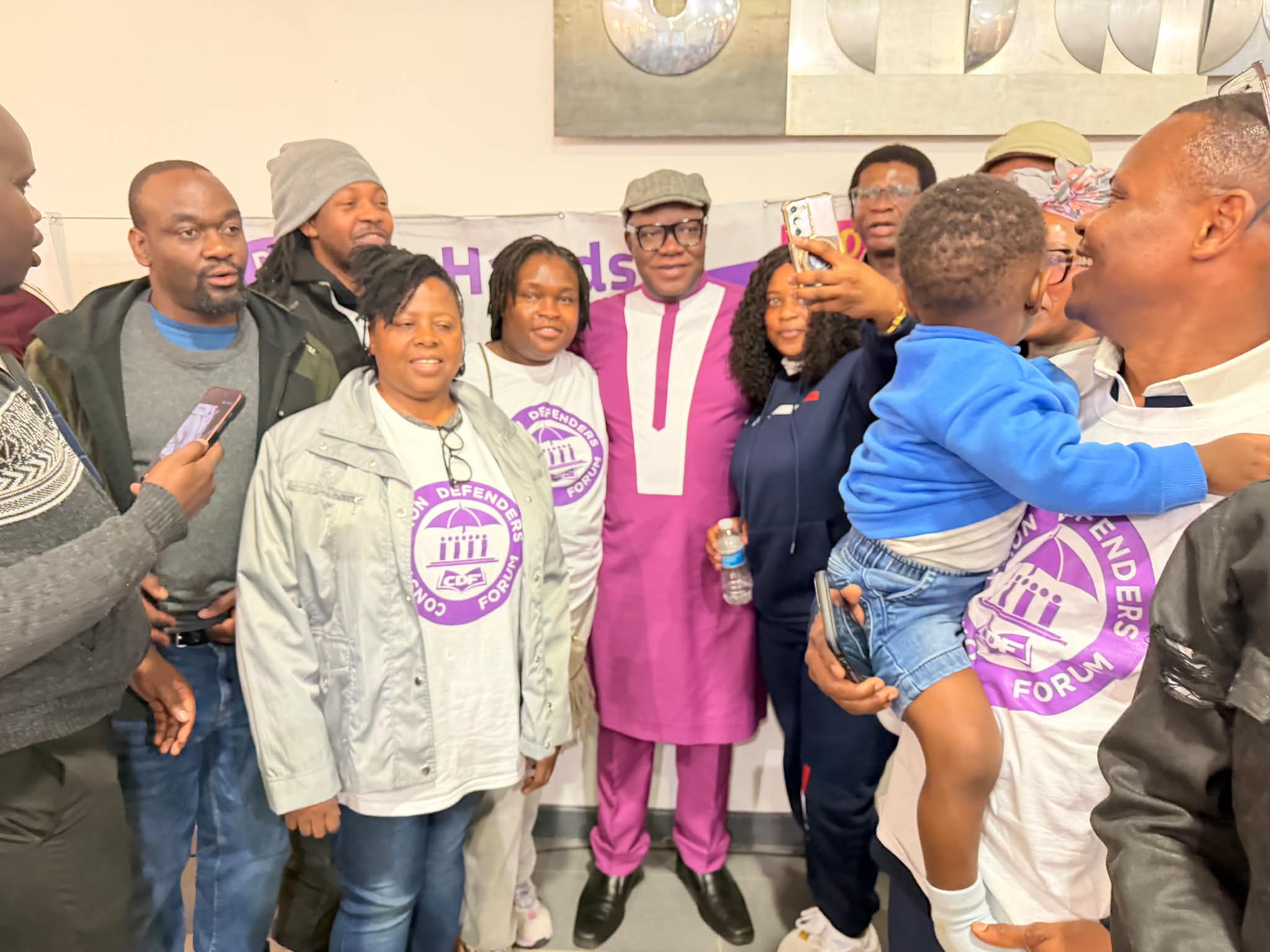
Outside, the Constitution Defenders Forum (CDF), the Zimbabwe Human Rights Organisation (ZHRO), ROHR Zimbabwe and allied diaspora groups gathered under banners reading "ZANU-PF REGIME MUST GO" and "ZANU-PF REGIME STOP: ABDUCTIONS, ARBITRARY ARREST, PERSECUTION, CORRUPTION, POLICE BRUTALITY, HUMAN RIGHTS VIOLATIONS." A Metropolitan Police Liaison Officer stood by, as he has done at every one of these demonstrations outside the embassy over the past eighteen months.
How Zimbabwe's “Patriotic Act” Was Drafted to Never Touch the Hands That Wield It
A ZHRO Briefing Note on CAB3, the Criminal Law (Codification and Reform) Amendment Act, 2023, and the Politics of One-Way Accountability
Zimbabwe's Criminal Law (Codification and Reform) Amendment Act, 2023 — universally known as the “Patriotic Act” — was sold to the nation as a shield for sovereignty. It criminalises any citizen who, in the state's judgement, “wilfully injures the sovereignty and national interest of Zimbabwe,” with penalties that until a 2025 High Court ruling included death, life imprisonment, loss of citizenship, and a five-year ban from voting or holding office. Its architects insisted it existed to protect the constitutional order from subversion.
Constitutional Amendment Bill No. 3 (CAB3) now gives that claim its sharpest test. If the Patriotic Act genuinely exists to protect Zimbabwe's constitutional order from those who would “subvert, upset, overthrow or overturn” it, then a bill advanced through a manufactured, coercive, and internationally condemned “consultation” process — one that strips fixed presidential term limits, concentrates judicial appointments in the executive, and weakens independent electoral oversight — ought to be the single clearest case the Act was written to catch. It is not. And the reason why is the argument.
I. A Law Built With Only One Door
Read the Patriotic Act closely and a structural fact emerges: it has no clause, no offence, and no mechanism capable of being turned against the state itself. Section 22A criminalises a citizen who meets or communicates with a foreign government “with the aim of subverting, upsetting, overthrowing or overturning the constitutional government in Zimbabwe.” It criminalises advocacy for sanctions. It criminalises participation in international forums that embarrass the state. Every verb in the statute points outward, from the citizen toward the state, or from the diaspora toward Harare. None of them point back.
This is not an oversight. It is the design. A law intended even-handedly to protect “the constitutional order” from subversion, regardless of who does the subverting, would need to contemplate the possibility that subversion could originate from within government — from a ruling party using its parliamentary majority to rewrite the constitution it swore to uphold. The Patriotic Act contemplates no such thing. It was never drafted as a neutral guardian of constitutional order. It was drafted as a weapon with a single grip, shaped to fit only the hand of the state, and only ever swung outward.
The fastest ever time has been 25 hours - thus more than a day! Last year was 34 hours. We are not able to coordinate multiple starts for differing walking abilities - therefore it’s a fixed start time [Ideally 5:00am to 5:30am] - and a drop out option (driven to a rail station or the end point/major meeting point) only!
The political capture of traditional leaders in Zimbabwe
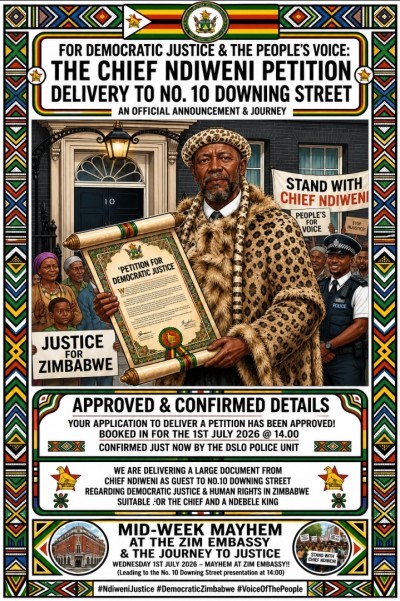
Chiefs and other traditional leaders are unelected, hereditary figures who serve as the primary local governance structure in rural areas, acting as custodians of cultural values, customs, and communal land while also performing administrative and judicial functions within their communities. In rural Zimbabwe, chiefs control land allocation and access to communal resources and resolve disputes.
Section 281(2) of the 2013 Constitution emphatically provides that traditional leaders must not be members of any political party or in any way participate in partisan politics or act in a partisan manner or further the interests of any political party.
Clause 20 of CAB3 would repeal s 281(2). If this amendment is passed traditional leaders would be allowed to freely engage in political activities. The explanatory memorandum tries to justify this radical change on the basis that stopping traditional leaders from political activity right to take part in political activities violates their political rights. This justification is not sound. If traditional leaders are affiliated to a political party villagers will believe that the will be biased in carrying out their various functions such land allocation, dispute settlement and distribution of government food aid. Villagers who are members of pollical parties not favoured by the traditional leader will fear that they will be discriminated against. The same considerations apply to judges who are required to be politically non-partisan.
There are other compelling reasons why traditional leaders should Zimbabwe to remain politically neutral. Politicisation weakens the cultural and historical role of chiefs, turning them into political operatives rather than custodians of traditional values. Chiefs derive authority from tradition, not elections and their legitimacy depends on their neutrality.
zhro.org.uk | Angmering, West Sussex, United Kingdom
OBSERVER REPORT
Constitution Defenders Forum (CDF)
Inaugural UK Town Hall Meeting
Saturday, 6 June 2026 | University of Leicester Campus
Report Author
John C. Burke — Managing Trustee, ZHRO (Zimbabwe Human Rights Organisation)
Event Date
Saturday, 6 June 2026
Venue
University of Leicester Campus, Leicester, United Kingdom
Attendance
In excess of 100 Zimbabweans drawn from across the United Kingdom
Report Status
Observer Report — Civil Society Record
1. OBSERVER'S JOURNEY & CONTEXT
This report is submitted in the personal capacity of John C. Burke, Managing Trustee of the Zimbabwe Human Rights Organisation (ZHRO), who attended the event as an observer on Saturday 6 June 2026 — travelling from the ZHRO headquarters in Angmering, West Sussex, arriving at the University of Leicester campus at approximately 11:00 am.
ZHRO was established as a human rights advocacy organisation representing Zimbabweans in the diaspora, and has maintained a sustained campaign over nearly a decade — including multiple petition deliveries to the offices of successive Prime Ministers at 10 Downing Street — on issues of democratic rights, the right of return, the Diaspora Vote, and constitutional protection. Through long-standing partnerships with Chief Felix Ndiweni and his referendum strategies (z-dc.com) and through alliances with ROHR Zimbabwe and other civil society formations, ZHRO has consistently championed the constitutional rights of all Zimbabweans, wherever they reside.
It is in that spirit — and as one who has attended the Zimbabwe Vigil since 2013 — that this observer attended the inaugural UK Town Hall Meeting of the Constitution Defenders Forum.
TENDAI BITI IN THE UK AS MNANGAGWA’S CONSTITUTIONAL STEAMROLLER ADVANCES
4–6 June 2026 • Chatham House, London & John Foster Hall, Leicester
EXECUTIVE SUMMARY
On Thursday 4 June 2026, Tendai Biti — former Finance Minister of Zimbabwe, co-founder and Convener of the Constitution Defenders Forum (CDF), and one of the country’s most prominent democratic voices — arrived quietly in the United Kingdom. His arrival was deliberately low-key: ZANU-PF’s operatives and sympathisers, who operate with considerable freedom across the UK and Europe, have a documented history of disrupting opposition engagements and reporting movements back to Harare.
His timing is not accidental. Back in Zimbabwe, President Emmerson Mnangagwa’s ruling party is driving the Constitution of Zimbabwe Amendment (No. 3) Bill — universally known as CAB3 — through Parliament at breakneck pace. Tabled for its First Reading on Tuesday 3 June 2026, CAB3 represents, in the words of its critics, a constitutional coup in slow motion: the systematic dismantling of independent oversight and the concentration of power in the executive. Biti has come to Britain to ensure that the world does not look away.
He spoke at Chatham House on the afternoon of 4 June, and on Saturday 6 June he addresses a major CDF UK Federation Town Hall in Leicester. ZHRO was represented at the Chatham House engagement; this report brings together our member’s account of that meeting alongside the wider political context.
THE CHATHAM HOUSE ENGAGEMENT — 4 JUNE 2026
Chatham House — formally the Royal Institute of International Affairs — is one of the world’s leading think-tanks on international affairs and foreign policy, located at St James’s Square in central London. An invitation to speak there carries substantial weight and speaks to the growing international recognition of Zimbabwe’s constitutional crisis.
The engagement took place under the Chatham House Rule, which permits participants to use the information received but prohibits attribution to any specific speaker or organisation. The specific contents of the discussion and the identity of other participants in the audience are not disclosed here. What follows is the report prepared by ZHRO/CDF member Blessing Tariro Makeyi, reproduced verbatim.
CDF MEETING FEEDBACK — REPORT
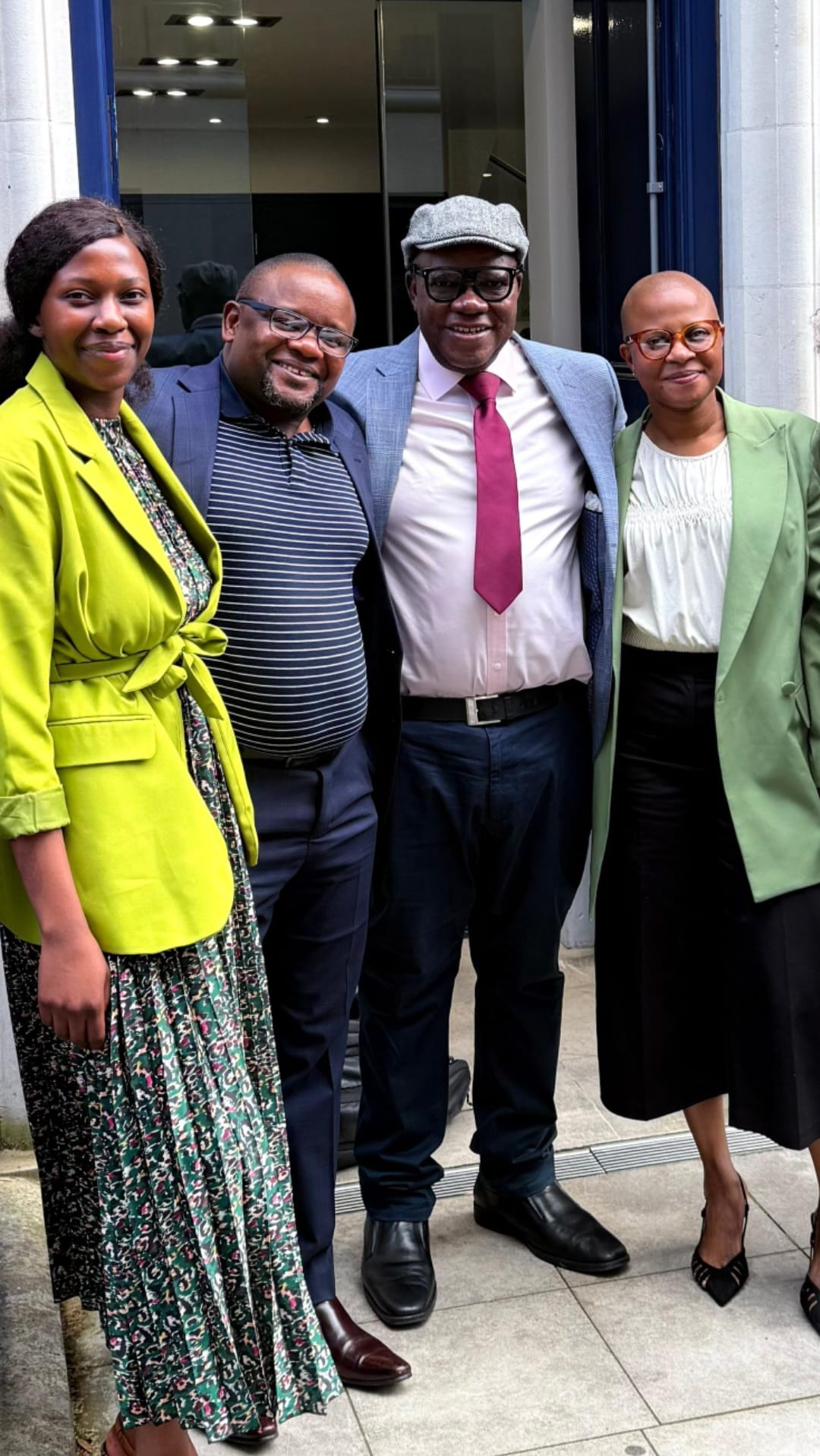
Meeting Feedback – Engagement with Convener Tendai Biti – Report by Blessing Tariro Makeyi
Venue: Chatham House, London — 4 June 2026 all photos courtesy of Blessing Tariro Makeyi
The Constitution Defenders Forum (CDF) UK Diaspora Chapter attended a meeting convened by Tendai Biti at Chatham House, London. The engagement provided a valuable platform for diaspora voices to interface with a senior figure in Zimbabwe’s opposition and civic landscape.
The discussion was substantive, touching on the deteriorating constitutional order in Zimbabwe, the threat posed by CAB3, and the broader erosion of democratic institutions. Biti’s framing of the crisis as one requiring both legal resistance and sustained public mobilisation resonated strongly with CDF’s own position. The meeting reinforced the urgency of coordinated action across diaspora formations and domestic opposition structures. CDF took the opportunity to assert its position clearly — that CAB3 represents an unconstitutional power grab and that the dismantling of oversight bodies including the ZHRC and ZGC cannot go unchallenged.
Overall, the engagement was productive and affirmed that the diaspora’s role in applying international pressure remains critical. CDF will continue to seek and build on such engagements as part of its broader advocacy strategy.
Report by: Blessing Tariro Makeyi (ZHRO / CDF)
Also attending as CDF Members: Edgar Tafadzwa Mafusire, Ruvimbo Makumbe. Plus Founder Mr Tendai Biti
WHAT IS CAB3 — AND WHY DOES IT MATTER?
The Constitution of Zimbabwe Amendment (No. 3) Bill is the Mnangagwa regime’s most audacious assault on Zimbabwe’s constitutional architecture since the 2013 constitution was adopted. Its stated justifications are administrative efficiency and fiscal discipline. Its real effect is the systematic hollowing out of every independent body that might constrain executive power.
CAB3: KEY PROVISIONS UNDER ATTACK
Abolition or merger of the Zimbabwe Human Rights Commission (ZHRC), the Zimbabwe Gender Commission (ZGC), and other independent commissions
Concentration of appointment powers in the Presidency, bypassing parliamentary oversight
Removal of constitutional safeguards designed to prevent the abuses of the Mugabe era
Acceleration of a parliamentary process that has deliberately excluded meaningful public consultation
Critics — including Biti, CDF, ZHRO, and a growing number of international legal and human rights bodies — argue that CAB3 is not a reform bill but a constitutional coup. It is being pushed through a parliament whose electoral mandate is itself contested. The speed of its passage, deliberately timed to outrun organised opposition, is itself a statement of intent.
WHO IS TENDAI BITI — AND WHY DOES HIS VOICE CARRY WEIGHT?
Tendai Biti is not a comfortable exile issuing statements from a safe distance. He has lived and continues to live the consequences of his opposition. He was arrested and detained by the Mnangagwa regime. He has been physically assaulted. He has faced politically motivated prosecutions. He sought and was granted refuge in Zambia before returning to Zimbabwe to continue his work.
His credentials are formidable. As Finance Minister in the GNU (Government of National Unity) from 2009 to 2013, he rescued Zimbabwe from the abyss of hyperinflation — introducing the multi-currency system that stabilised an economy where a single loaf of bread had cost trillions of Zimbabwean dollars. That record gives him an authority that no amount of regime propaganda can erase.
He is co-founder and Convener of the Constitution Defenders Forum, which now has a significant and growing UK diaspora chapter. His visit to Britain this week — conducted discreetly to avoid interference — demonstrates that the international dimension of Zimbabwe’s democratic struggle is intensifying, not receding.
Organiser: Constitution Defenders Forum (CDF) UK Federation
“Let us stand together for constitutionalism, democracy and the rule of law.”
The Leicester meeting follows directly from the Chatham House engagement and represents the grassroots dimension of Biti’s UK visit. Where Chatham House provides the platform for high-level international dialogue, John Foster Hall is the community space — the diaspora coming together to hear directly from their political leadership and to coordinate their contribution to the democratic struggle.
THE STEAMROLLER: MNANGAGWA’S ENDGAME
The metaphor of the steamroller is apposite. ZANU-PF does not debate, negotiate or accommodate. It rolls forward, flattening opposition, institutions and law in its path. CAB3 is the latest and most brazen advance. The regime calculates that by the time the international community fully appreciates what has happened, the constitutional damage will be irreversible.
That calculation may be correct — unless the diaspora, civil society, and democratic governments act with urgency. Biti’s visit to the UK this week is an explicit request for that urgency. The message from Chatham House to Leicester is consistent: the window for meaningful resistance is open, but it is closing.
ZHRO POSITION
ZHRO unequivocally opposes CAB3 and calls upon the UK Government — as a fellow Commonwealth member and as a state that bears historic responsibility for the conditions under which Zimbabwe’s constitution was crafted — to make clear that the unilateral dismantling of constitutional oversight will have consequences for UK-Zimbabwe relations.
We commend Tendai Biti’s courage in visiting the United Kingdom and we commend our member Blessing Tariro Makeyi, alongside Edgar Tafadzwa Mafusire and Ruvimbo Makumbe, for representing both ZHRO and CDF at the Chatham House engagement.
DEMOCRACY UNDER SIEGE: TENDAI BITI IN THE UK AS MNANGAGWA’S CONSTITUTIONAL STEAMROLLER APPROACHES
4–6 June 2026 • Harare London & Leicester
EXECUTIVE SUMMARY
On Thursday 4 June 2026, Tendai Biti — former Finance Minister of Zimbabwe, leader of the Constitution Defenders Forum (CDF), survivor of arrest, detention and assault at the hands of the Mnangagwa regime — arrived in the United Kingdom. His visit comes at one of the most critical moments in Zimbabwe’s post-independence history. He is speaking at Chatham House in London today at 4:00 PM and hopes to engage with the Foreign, Commonwealth & Development Office (FCDO). On Saturday 6 June, he addresses a major CDF UK Town Hall Meeting in Leicester.
He arrives in Britain with the clock ticking in Harare. President Emmerson Mnangagwa’s ruling ZANU-PF is driving the Constitution of Zimbabwe Amendment (No. 3) Bill — universally known as CAB3 — through Parliament at breakneck speed. The Bill was tabled for its First Reading on Tuesday 3 June 2026. The regime’s stated parliamentary timetable runs “until the end of June.” This is a constitutional coup in slow motion, and Biti has come to ensure the world does not look away.
THE WEEK IN FOCUS: TWO CRUCIAL EVENTS
TODAY — Thursday 4 June 2026
Tendai Biti speaks at Chatham House, London, 4:00 PM. He also seeks engagement with the FCDO to brief UK ministers on the crisis in Zimbabwe.
SATURDAY — 6 June 2026
CDF UK Federation Town Hall Meeting John Foster Hall, 15 Manor Rd, Oadby, Leicester LE2 2LG 1:00 PM – 5:00 PM (Doors: 12:30 PM) All are welcome. Free to attend.
Whitehall, London SW1A | Friday 15 May 2026, 14:00 GMT
Zimbabwe Human Rights Organisation (ZHRO) & Zimbabwean Independent Diaspora Coalition [ZAPU Diaspora | CCC Diaspora | ROHR | Women of Zimbabwe Arise (WoZ) | Chief Felix Ndiweni]
ZHRO et al formally submits petition and intelligence report on Zimbabwe's constitutional crisis to the UK Government and Commonwealth Secretariat
Constitutional Amendment Bill No. 3 declared illegal by independent legal experts and now subject to active challenge before Zimbabwe's own Constitutional Court — as ZANU PF continues documented transnational repression against diaspora activists on British soil.
Formal submissions delivered to
Office of the Prime Minister
10 Downing Street, London
FCDO — Lord Collins
Foreign, Commonwealth & Development Office
Joint Committee on Human Rights
House of Commons, Westminster
Commonwealth Secretariat
Attn: Secretary-General Shirley Botchwey
South African High Commission
Attn: The High Commissioner — 15 Whitehall, London SW1A
The Zimbabwe Human Rights Organisation (ZHRO) and the Zimbabwean Independent Diaspora Coalition today formally submitted two documents — a petition to the Prime Minister of the United Kingdom and a detailed intelligence brief arising from a Twitter Spaces discussion on 15 May 2026 — to five institutions: the Office of the Prime Minister, the Foreign Commonwealth and Development Office (FCDO), the Joint Committee on Human Rights (JCHR), the Commonwealth Secretariat, and the South African High Commission in London.
The submissions set out, in formal and evidenced terms, ZHRO's position that Constitutional Amendment Bill No. 3 (CAB3) — currently being driven through Zimbabwe's Parliament by the ZANU PF regime — is constitutionally illegal, that its passage is being pursued through intimidation and manufactured consent, and that the same apparatus of repression is being deployed by ZANU PF against members of the Zimbabwean diaspora on British soil.
“CAB3, as currently constituted, cannot lawfully proceed without a referendum. The regime has chosen to manufacture a parliamentary debate and call it consultation. The Constitution does not permit this. The process is void.”
— Constitutional lawyer Doug Coltart, May 2026
Why CAB3 is constitutionally illegal
Section 328 of Zimbabwe’s 2013 Constitution — adopted through popular referendum and representing the most legitimate constitutional document in Zimbabwe’s history — requires a national referendum before presidential term limits can be extended or the method of presidential election altered. CAB3 proposes both: extending presidential and parliamentary terms from five to seven years, replacing the direct popular election of the President with election by a joint sitting of Parliament requiring only 30% of the vote, and retrospectively extending President Mnangagwa’s current term. No referendum has been held. No credible independent legal opinion supports the regime’s claim that parliamentary approval alone is sufficient. CAB3 is void.
On 13 May 2026, a formal constitutional challenge to CAB3 was filed before Zimbabwe’s own Constitutional Court — brought by war veterans as representatives of the people of Zimbabwe, against President Mnangagwa and the Attorney General, represented by Professor Lovemore Masuku. The Court accepted the case, convened a case management meeting, and granted applications from independent media to live-stream proceedings. State broadcasters were excluded from the live-stream authorisation. The constitutional illegality of CAB3 is no longer diaspora advocacy alone: it is now before Zimbabwe’s own judiciary.
Transnational repression on British soil
ZHRO has documented a sustained pattern of surveillance, naming and intimidation of Zimbabwean diaspora activists on British soil, directed by ZANU PF UK & Europe — the formally constituted British division of Zimbabwe’s ruling party. A leaked memo published on 11 May 2026 named more than 50 UK-based activists as targets for prosecution under Zimbabwe’s Patriotic Act 2023. This follows articles published in November 2021 and March 2026 naming ZHRO members who attended lawful public demonstrations in Glasgow and Blackburn. The Varakashi digital militia continues to operate across WhatsApp, X/Twitter and Facebook targeting UK-resident diaspora members. ZHRO’s formal reports to the FCDO and to the Home Secretary have received inadequate responses. That inadequacy is itself documented in these submissions.
A note to the South African High Commission
President Ramaphosa’s visit to President Mnangagwa’s Precabe Farm in Kwekwe on 4 May 2026 — conducted privately and without prior public announcement, in the company of individuals under active South African financial investigation — drew immediate and formal challenge within South Africa’s own Parliament. The Democratic Alliance submitted parliamentary questions on the use of state funds and condemned the association with figures linked to alleged money laundering. Respected Zimbabwean media executive Trevor Ncube, in an open letter of 10 May 2026, called directly on President Ramaphosa, as SADC Chair, to engage not only with the Mnangagwa administration but with Zimbabwe’s civil society, opposition, and constitutional defenders. ZHRO submits these documents to the High Commission in that spirit.
The regional security implications of CAB3 are of direct and specific relevance to South Africa. The provision reducing the parliamentary threshold for electing Zimbabwe’s President to 30% of a joint sitting — read alongside Zimbabwe’s citizenship acquisition laws — creates a mechanism by which a foreign power could effectively purchase control of Zimbabwe’s executive. Zimbabwe borders South Africa and sits atop some of the world’s largest reserves of lithium, platinum, diamonds and chrome. This is not a matter of internal Zimbabwean politics. It is a matter of regional security that South Africa, as SADC Chair, has both the standing and the responsibility to address before the parliamentary vote proceeds.
A note to the Commonwealth Secretariat
Zimbabwe was suspended from the Commonwealth in 2002 and withdrew in 2003 following documented democratic backsliding. ZHRO formally submits to Secretary-General Shirley Botchwey and the Commonwealth Secretariat that the conduct documented in these materials — constitutional manipulation without referendum, capture of the Zimbabwe Electoral Commission, abduction of student leaders, and transnational repression of diaspora activists on the soil of a fellow Commonwealth member — is directly inconsistent with the values of the 1991 Harare Declaration. These submissions are placed formally on the record as evidence relevant to any future consideration of Zimbabwe’s Commonwealth re-engagement or re-admission.
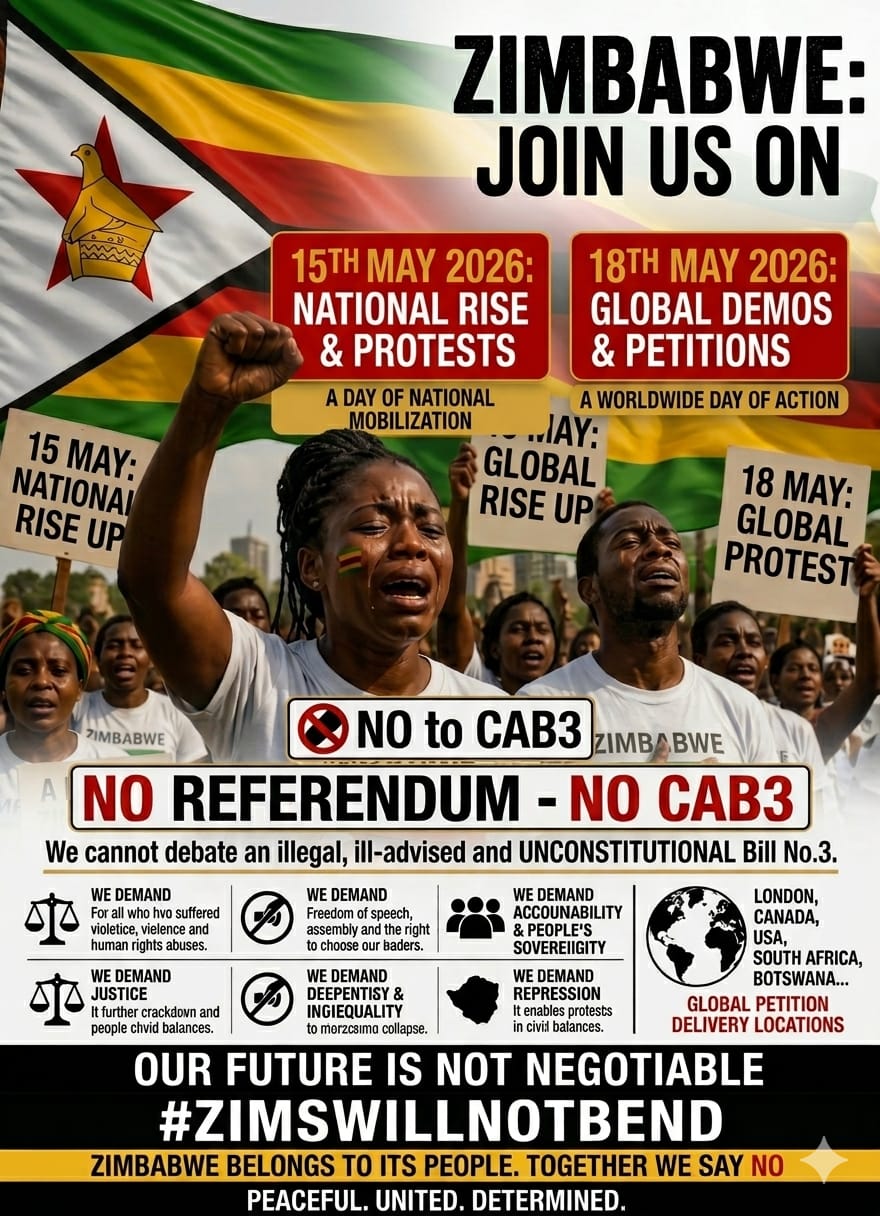
In recent weeks, public debate around Constitutional Amendment Bill No. 3 (CAB3) has intensified, drawing passionate responses from citizens both at home and across the diaspora. Protests, petitions, and calls for national mobilization reflect a growing sense that Zimbabwe stands at a defining crossroads. Yet amid all the noise, there is a critical point that must remain at the center of this conversation: the constitutional requirement for a referendum.
This is not a technicality. It is the foundation of constitutional democracy.
The 2013 Constitution was born out of broad public consultation and national consensus. It represents the will of the people, not the preferences of those temporarily in power. Any attempt to alter that foundational document—especially in ways that may affect governance, rights, or democratic structures—demands direct public participation through a referendum. This is not optional. It is a constitutional obligation.
Efforts to redirect the conversation toward the content of CAB3—whether its provisions are beneficial or harmful—miss the point entirely. That shift is a distraction. It invites endless debate, division, and confusion, while quietly bypassing the core legal requirement that gives legitimacy to any constitutional change. Without a referendum, the process itself becomes unlawful, regardless of the arguments for or against the bill’s contents.
This is why the message from civic groups and activists has been consistent: No referendum, no legitimacy. No CAB3 without the people’s direct consent. The demands expressed in public demonstrations and advocacy campaigns reflect deeper concerns about governance and accountability. Citizens are calling for justice for victims of violence, protection of fundamental freedoms such as speech and assembly, and an end to repression. They are demanding transparency, equality, and respect for the rule of law. These are not abstract ideals—they are the pillars of a functioning democracy.
But none of these demands can be secured if the constitutional process itself is undermined.
A United Voice for Justice, Democracy, and a Referendum
Across the world, Zimbabweans continue to rise with one voice demanding fairness, accountability, and respect for their nation's future. The growing call to reject CAB3 is not merely about politics — it is about protecting the constitutional foundations that define Zimbabwe and its people.
But we must be precise about what that constitutional foundation actually demands. The 2013 Constitution of Zimbabwe is unambiguous: changes of this magnitude require a REFERENDUM — not a parliamentary vote, not a public "debate," and certainly not the regime's orchestrated propaganda exercise. CAB3, as currently constituted, is therefore not a legitimate legislative process. It is an illegal ruse.
This distinction matters enormously. The Zanu PF regime has deployed the full resources of the Zimbabwean state — media, money, and machinery — to wage a propaganda and psychological operations campaign. Its goal is to drag Zimbabweans into a debate about the merits of CAB3, as though it were a normal policy discussion. It is not. The moment we accept the framing of debate, we have already conceded the regime's central deception: that this process is lawful. It is not.
There is nothing to debate. There is only one lawful path: a referendum of the Zimbabwean people.
This is not a radical demand — it is the law. The 2013 Constitution exists precisely to prevent any government, including this one, from consolidating power through parliamentary manipulation alone. When Zimbabweans at home and in the diaspora petition against CAB3, they must do so with this clarity at the forefront:
we are not asking the regime to improve CAB3, or to consult more widely, or to slow down. We are demanding that it be recognised for what it is — constitutionally void — and that the referendum the law requires be held.
For many, this moment represents more than a protest. It is a stand for the constitution as the living foundation that guarantees order, balance, and protection for every citizen. When people come together to defend it, they are not only preserving law — they are safeguarding the dignity of generations to come.
Zimbabweans, both at home and in the diaspora, have shown remarkable resilience and unity. From the streets of Harare to gatherings in London, there is a shared determination to ensure that voices are heard and that decisions reflect the genuine will of the people — expressed through the instrument the Constitution prescribes: a referendum. Peaceful demonstrations and petitions are powerful tools. They send a clear message that the people are watching, engaged, and unwilling to be distracted or manipulated.
What makes this movement powerful is its unity and its clarity of purpose. We will not be drawn into the regime's preferred terrain of endless procedural debate. We will not lend legitimacy to an illegal process by treating it as though it merely needs amendment. We stand on one ground: the Constitution, and the referendum it demands.
Different backgrounds, different experiences, yet one common goal — to see a Zimbabwe where leadership is accountable, where laws protect rather than restrict, and where the future is built on transparency, trust, and the expressed will of the people.
As the 15th of May [and the subsequent 18th May demo] approaches, it stands not just as a date, but as a symbol — of courage, of collective action, and of hope. It reminds us that change does not come from silence, and it does not come from being drawn into a rigged debate. It comes from people willing to stand together, clearly and firmly, for what is right and what is lawful.
The message is clear: CAB3 is constitutionally illegitimate. The people of Zimbabwe demand their referendum. And together, that voice cannot be ignored.
Ramaphosa was photographed at Mnangagwa's 405-hectare Precabe Farm in Kwekwe [Click on the image, or here. to see the full size- just in case you think we are fabricating this meeting], with footage circulating on social media showing the two heads of state walking together. Present alongside them were Wicknell Chivayo, Kudakwashe Tagwirei, and Paul Tungwarara — all prominent businessmen with close ties to the ruling establishment. No official communiqué has been released. iHarare News
This is not a routine bilateral visit. The cast of characters tells the real story:
Wicknell Chivayo — investigated by ZACC over a $100 million ZEC deal to supply election material for the 2023 elections, with invoices allegedly inflated by 30,000%. He also recently announced a US$3.6 million donation to Members of Parliament — widely interpreted as an attempt to secure CAB3 votes — which even Zanu PF's own Treasurer-General called "a base, unethical, unprincipled and unnecessary attempt to influence the outcome of the ongoing debate on CAB3." The Africa ReportZimEye
Kudakwashe Tagwirei — sanctioned by both the US and UK governments; serves as a special advisor to President Mnangagwa and holds substantial interests in Zimbabwe's energy and fuel sectors. Central News
The Internal Zanu PF Dimension — Critical Context:
CAB3 proposes to abolish the direct election of the President by popular vote, instead having Parliament elect the head of state in a joint session — and erodes the principle of automatic succession by the Vice President, effectively closing a clear path to the top office for both Chiwenga and second Vice President Mohadi. My Zimbabwe News
When Chiwenga stood in a Roman Catholic church and invoked King Hezekiah — "extra years are not always a blessing" — he was not preaching. He was signalling. He told congregants that Hezekiah spent his extra years watching his kingdom prepare for captivity, and that "the extra time had consequences." Nehanda Radio NewZimbabwe.com
Constitutional lawyer Thabani Mpofu has now warned that if CAB3 becomes law before September 2026, it could potentially allow Mnangagwa's tenure to be reset to a new seven-year term running to 2033 — not merely 2030. Nehanda Radio
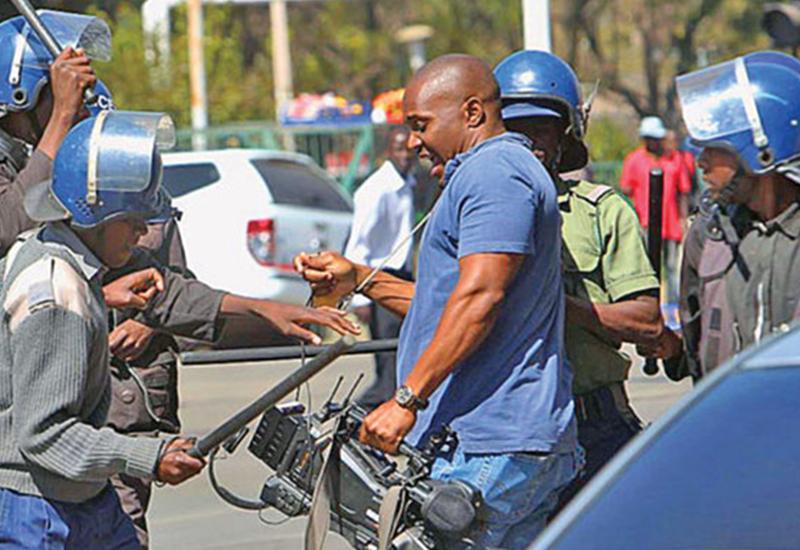
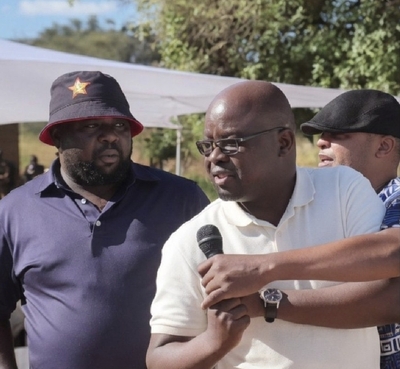
On a day set aside to honour the dignity and contribution of workers, an unsettling incident unfolded in Zimbabwe—one that has come to symbolise a deeper, more troubling reality. At a Workers’ Day event, Leslie Mhangwa, a democratically elected Member of Parliament, was forcibly prevented from addressing the very people he was chosen to represent. As he spoke about the pressing hardships facing ordinary citizens—rising inflation, stagnant wages, and the daily struggle to survive—the microphone was abruptly taken from him. The act, reportedly involving individuals aligned with ZANU-PF, was not merely disruptive. It was symbolic. It was the silencing of a nation.
“If an elected voice can be silenced, what remains for the ordinary citizen?”
Democracy Under Strain
In any democratic society, the right to speak—and to be heard—is not negotiable. It is foundational. Elected representatives are entrusted with the responsibility of carrying the voices of the people into public discourse. To deny them that platform is to erode the very essence of representation. This incident forces a difficult but necessary reflection: if a Member of Parliament can be publicly humiliated and denied the right to speak, what protection exists for the ordinary Zimbabwean? What space remains for truth?
 Walking Is Not a Crime: ZHRO's Walk for Freedom Targeted by Automated Attack
 Zimbabwe Human Rights Organisation (ZHRO) UK
 The Youth Must also be Activists
 First Scarborough to Whitby Walk for Freedom — 12 September 2026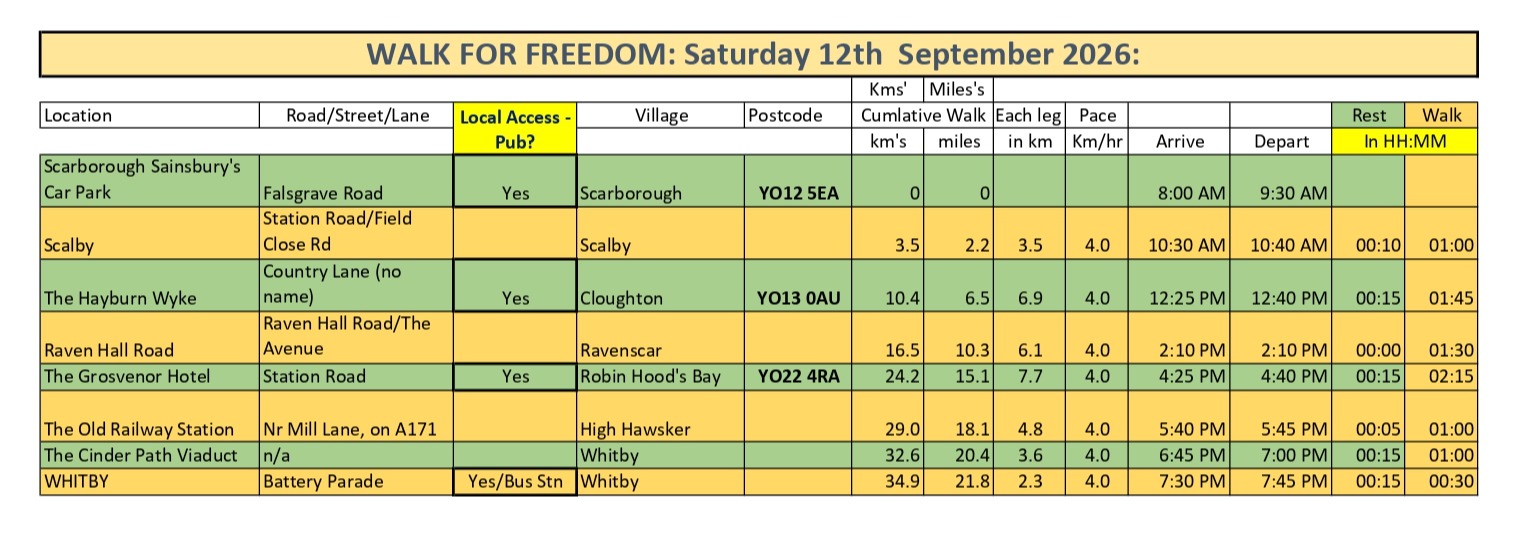
 Walk for Freedom 2026: 10 Years & Still Walking
 LEST WE FORGET: WHEN THOSE WHO ASK US TO REMEMBER HAVE THEMSELVES FORGOTTEN
 Walk For Freedom 2026 — 10th Anniversary!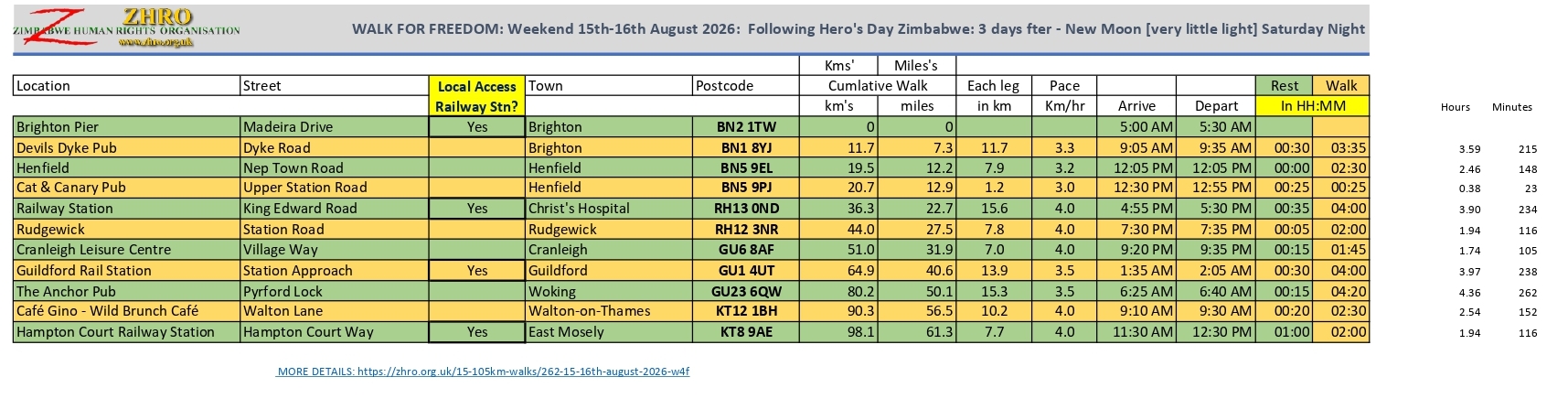
 ZIMBASSY
 A Handshake and a Placard:
 MANUFACTURED IMMUNITY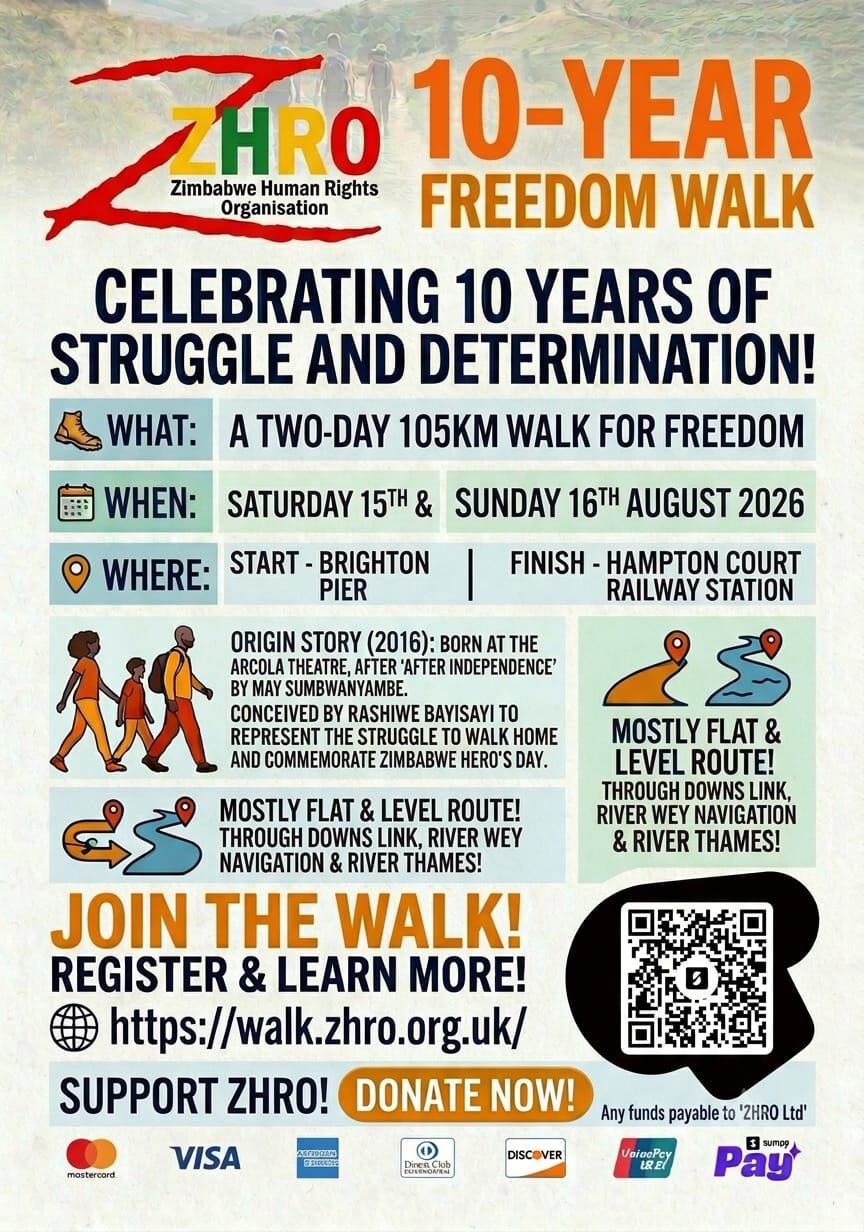
 The political capture of traditional leaders in Zimbabwe
 ZHRO | Zimbabwe Human Rights Organisation
 TENDAI BITI IN THE UK AS MNANGAGWA’S CONSTITUTIONAL STEAMROLLER ADVANCES
 URGENT BRIEFING
 Zimbabwe’s Constitutional Moment: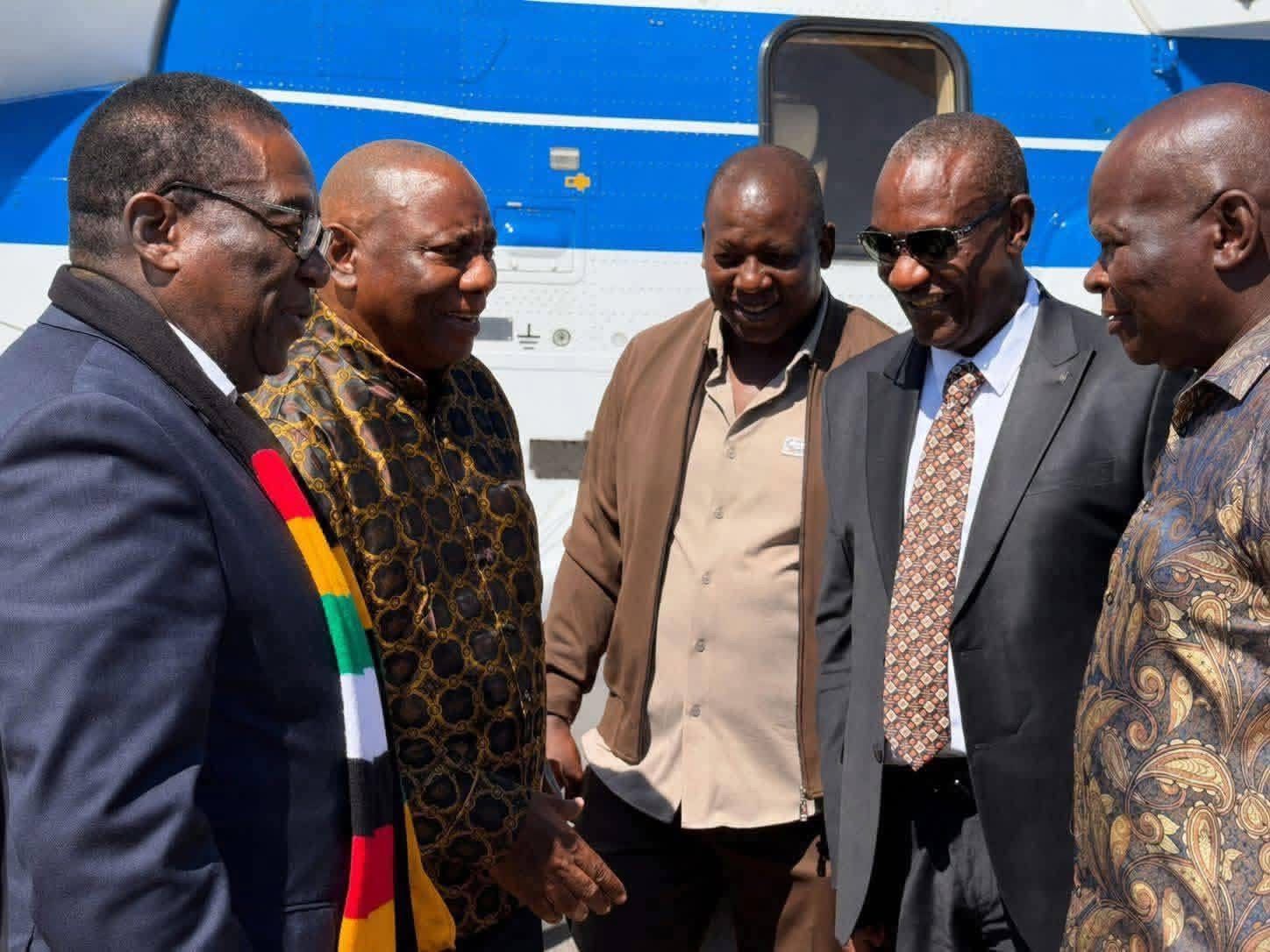
 A Nation Silenced: