


Why is Auxilla in the UK in JUNE
- Details
- Written by: Diaspora "No to Auxilla in the UK Group"
- Hits: 1481
 FLACID - [First Ladies of Africa's Criminally Insane Dictators]
A spoof on the Flair Summit with Ms Auxilla1 Mnangagwa, Wife and 'First Lady' of the ruthless dictator, Dr(?) Emmerson Mnangagwa of Zimbabwe2. But, check out the [old] Flair Summit Early Bird Ticket Prices3 Updated: taken from Take2Zimbabwe.com
BREAKING: 8th May 2025: Some initial checking has confirmed one of the speakers HAS NOT given permission and is NOT speaking at this event - more to follow/
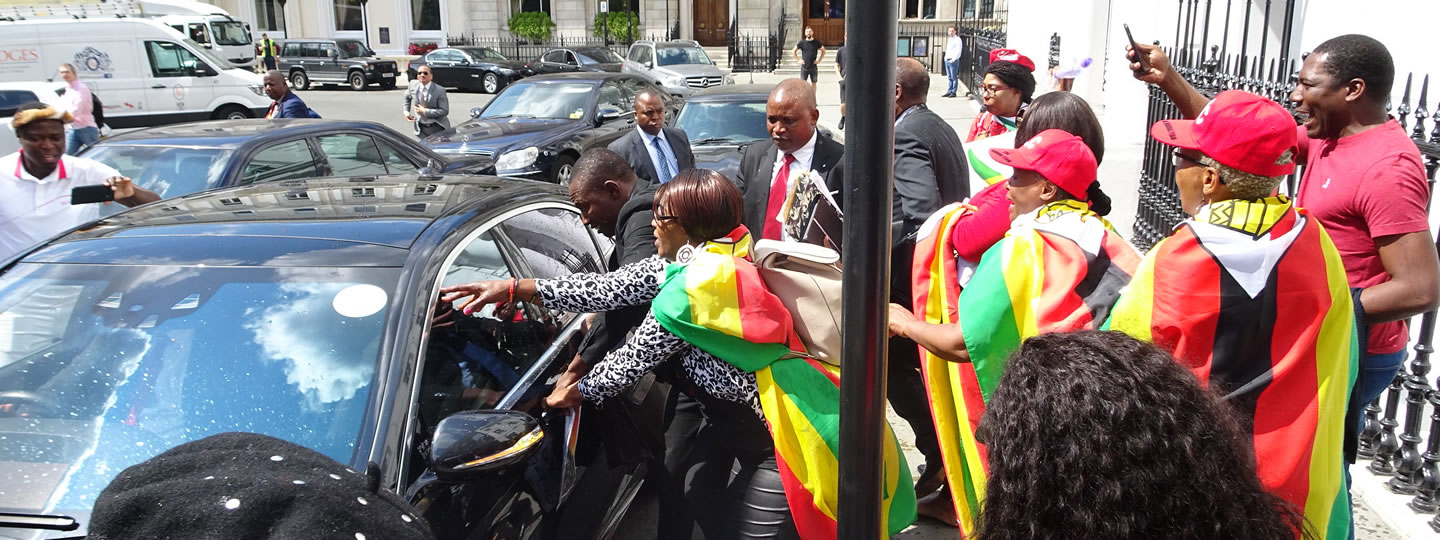
Further breaking: we recorded Dr Oxilla Mnangagwa rehearsing the speech for London, in June in a local hospital ward this evening
Whilst we acknowledge and respect the aspirational attributes of this innovative campaign [Flair Summit], the inclusion of Auxilla as "Patron Elect", has damned the event as a Dictators Wive's Club! Take note organisers, you have made a profound error of judgement – or you are being used as a laundry service!”.
Dictatorships and First Ladies - What Auxilla has done to the FLAIR SUMMIT
As of 2025, identifying the exact number of dictatorships in Africa is complex due to varying definitions of "dictatorship" and the dynamic nature of political regimes. Based on available data, particularly from sources like Freedom House and World Population Review, approximately 22 African nations are classified as "Not Free," indicating authoritarian regimes where a single leader or party holds absolute power, often suppressing political freedoms and civil rights. These regimes are commonly associated with dictatorship characteristics, such as repression of opposition, limited press freedom, and prolonged leadership tenures. However, this number can fluctuate due to coups, elections, or transitions, and some countries may be hybrid regimes with partial democratic elements.
Below is a list of African countries identified as having authoritarian regimes (based on recent data) and, where information is available, the names of their "First Ladies" or equivalent figures. Note that not all countries explicitly designate a "First Lady," and in some cases, the leader’s spouse may not be publicly prominent or documented. Additionally, some leaders may not be married, or their spouses’ identities may not be widely reported due to the secretive nature of certain regimes. If no "First Lady" is listed, it reflects a lack of accessible information or relevance in the public domain.
African Countries with Authoritarian Regimes and Their First Ladies (where known):
- Algeria - No prominent "First Lady" documented; President Abdelmadjid Tebboune’s spouse is not publicly highlighted.
- Angola - Ana Dias Lourenço, wife of President João Lourenço.
- Burkina Faso - No "First Lady" prominently documented; military junta led by Captain Ibrahim Traoré since 2022.
What Independence 18th April 2025
- Details
- Written by: John Burke
- Hits: 1384
 Our Request: “On the 18th April it will be 45 years since the Independence in Zimbabwe, fought by ZIPRA and ZANLA. However very little is evident of actual independence in today's Zimbabwe. In addition, as ZHRO we have created a "Walk for Freedom" campaign since 2017 {see ZHRO Walks 2017 - today } to question what is happening in Zimbabwe.” We as ZHRO created the website TAKE2ZIMBABWE to question if any Independence had occurred? We think not - thus the TAKE2 logo - as inspired by the Film makers clapper board - "Take Two"
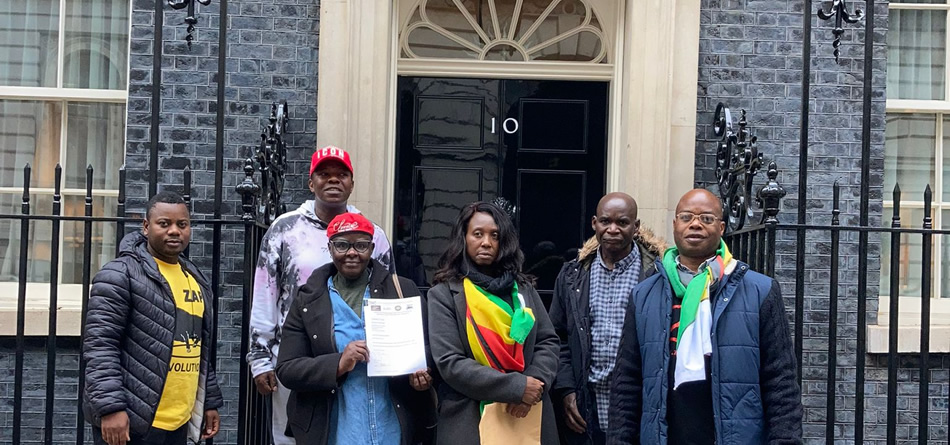
Downing St. Police Unit have approved our PETITION delivery 13:30 FRIDAY 18th April
A Call to Action: 45 Years of Stagnation – The “Walk to Nowhere” Campaign
On 18th April 2025, Zimbabwe will mark 45 years since its historic Independence, a hard-won victory achieved through the sacrifices of the Zimbabwe People’s Revolutionary Army (ZIPRA) and the Zimbabwe African National Liberation Army (ZANLA). This milestone should be a time of celebration, reflection, and pride in the promise of a free and prosperous nation. Yet, for many Zimbabweans—both at home and in the diaspora—the reality of independence feels hollow.
Decades of misrule, corruption, and repression have left the country in a state of stagnation, where the dreams of 1980 have faded into a "nowhere" of unfulfilled potential.
To mark this bittersweet anniversary, the Zimbabwe Human Rights Organisation (ZHRO) is launching a bold new campaign: the “Walk to Nowhere”—a combined Independence protest and a symbolic 45-mile (or 45-kilometre) walk. This initiative builds on ZHRO’s established “Walk for Freedom” campaign, which, since 2017, has seen activists cover grueling distances—such as the 105km trek from Brighton to London—to highlight the ongoing human rights abuses and lack of democratic progress in Zimbabwe. Now, on this 45th anniversary, we invite Zimbabweans and their supporters worldwide to join us in a poignant demonstration that mirrors the nation’s journey: 45 years, 45 miles, and still nowhere near true freedom.
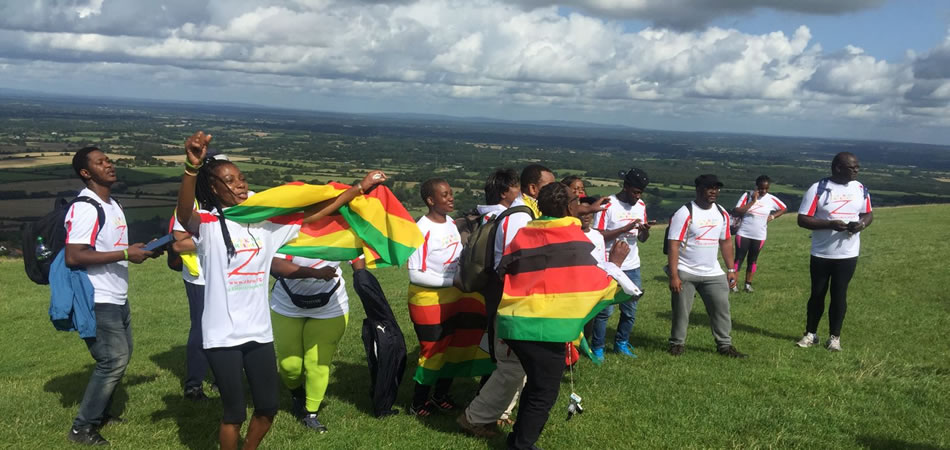
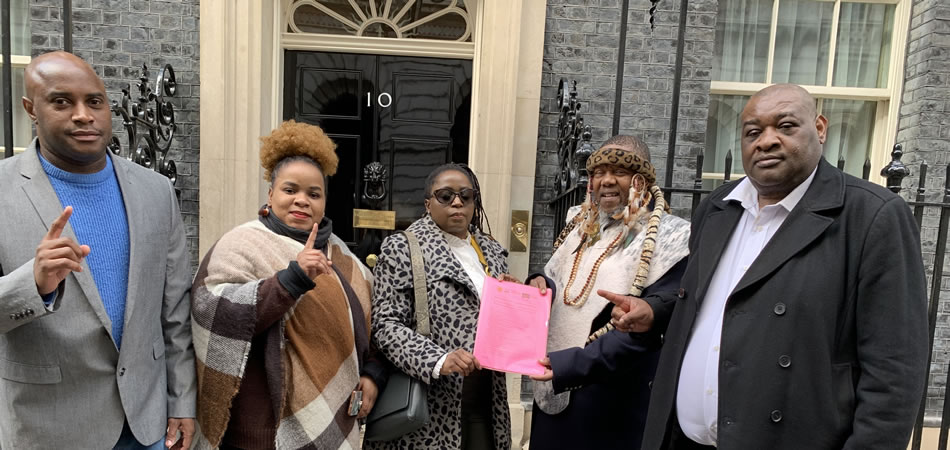
As Many Zimbabweans and their friend move towards London and other places to question 45 years since Independence - we will hand over the Petition to the PM and copies to the FCDO and Commonwealth Office later this evening SEE the Petition Here Click to Read/Download
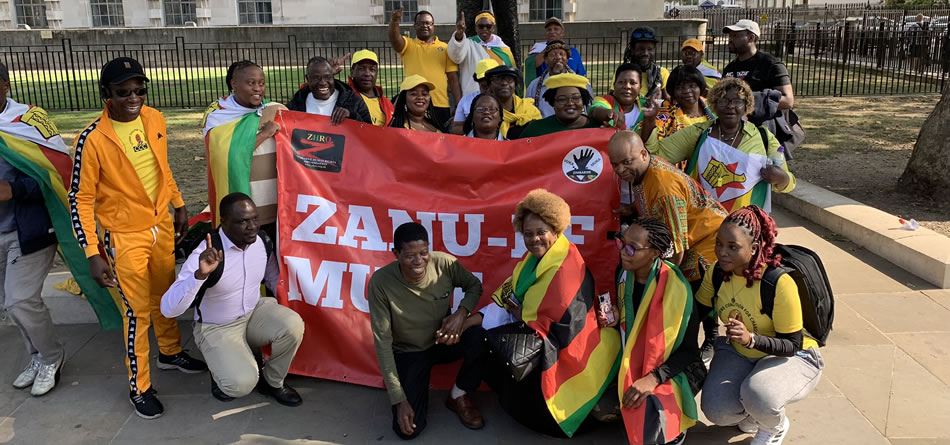
An excellent day all round, with a good number of supporters present. The Photo Log on our professional Flickr Platform of the day looks really good {Check it out CLICK HERE}
 We were in the ambit of 10 Downing Street for quite some time, however it was very noisy as the Rolling Thunder Veterans motor biker crew - in large numbers were opposite the gates to 10 Downing Street and they were revving their engines! Our video log at the door to Number 10, you can clearly hear the drone of their engines - that's why our video was a bit close up!
Dickson, Chief Ndiweni, Phylis Melody, Josephine and Henry all spoke well as to the reasons they were at the door with our written petition (see link above if you wish to read it too!).
You can hear what we all said at the flickr links {CLICK HERE} Let's not forget that we were there to protest at the 45th anniversary of Zimbabwe's "Independence", an Independence that has yet to materialise for the majority of Zimbabweans either in Zimbabwe, or in the global diaspora!
We all have profound questions about this 45 years since the 18th April 1980 - 45 YEARS! What can anybody say to make this anniversary a day for "celebrations" - No way - what has happened in Zimbabwe for 45 years is a tragedy, a phenomenal wasted opportunity.
Zimbabwe SHOULD be in the same class as DUBAI - but instead it's regressed to a failed third (maybe fourth) World, literal cess-pool - since the sewage systems have never been adequately maintained - FOR 45 YEARS! We have written about this aspect several times (CLICK HERE) to suggest that a good sewage system has Public Health Benefits - No Typhoid or Cholera!!
But what else has been neglected in this 45 years? Read our detailed AI deep researched petition as above {click here if you need a second look!} It makes difficult reading since the oppressive, dictatorial regime has such LIMITED skills - However when it comes to Maintaining their power, Vote Rigging, Political Violence, Propaganda, Abductions, Murder, Rape, Genocide, Corruption and Looting - this is the regime's main priorities.
As a government however, they are clueless clowns as we have attested to many times in our section called "Mismanagement" {CLICK HERE to Review} there are several detailed and well researched articles within this section; it is an appalling testament to the evil of Zanu PF.
45 Walk to Nowhere
- Details
- Written by: John Burke
- Hits: 1534
 Our Request: “On the 18th April it will be 45 years since the Independence in Zimbabwe, fought by ZIPRA and ZANLA. However very little is evident of actual independence in today's Zimbabwe. In addition, as ZHRO we have created a "Walk for Freedom" campaign since 2017 {see ZHRO Walks 2017 - today } to question what is happening in Zimbabwe.” We as ZHRO created the website TAKE2ZIMBABWE to question if any Independence had occurred? We think not - thus the TAKE2 logo - as inspired by the Film makers clapper board - "Take Two"
Update 10th April 2025: Downing St. Police Unit have approved our PETITION delivery 13:30 FRIDAY 18th April
A Call to Action: 45 Years of Stagnation – The “Walk to Nowhere” Campaign
On 18th April 2025, Zimbabwe will mark 45 years since its historic Independence, a hard-won victory achieved through the sacrifices of the Zimbabwe People’s Revolutionary Army (ZIPRA) and the Zimbabwe African National Liberation Army (ZANLA). This milestone should be a time of celebration, reflection, and pride in the promise of a free and prosperous nation. Yet, for many Zimbabweans—both at home and in the diaspora—the reality of independence feels hollow.
Decades of misrule, corruption, and repression have left the country in a state of stagnation, where the dreams of 1980 have faded into a "nowhere" of unfulfilled potential.
To mark this bittersweet anniversary, the Zimbabwe Human Rights Organisation (ZHRO) is launching a bold new campaign: the “Walk to Nowhere”—a combined Independence protest and a symbolic 45-mile (or 45-kilometre) walk. This initiative builds on ZHRO’s established “Walk for Freedom” campaign, which, since 2017, has seen activists cover gruelling distances—such as the 105km trek from Brighton to London—to highlight the ongoing human rights abuses and lack of democratic progress in Zimbabwe. Now, on this 45th anniversary, we invite Zimbabweans and their supporters worldwide to join us in a poignant demonstration that mirrors the nation’s journey: 45 years, 45 miles, and still nowhere near true freedom.
Why 45?
The number 45 is more than just a marker of years since Independence. It is a stark symbol of Zimbabwe’s arrested development. After 45 years, millions of Zimbabweans endure poverty, unemployment, and repression under a regime that has clung to power since 1980, led by the Zimbabwe African National Union-Patriotic Front (ZANU-PF). The liberation armies fought for self-determination, equality, and justice, yet today’s Zimbabwe is plagued by economic collapse, rampant corruption, and a ruling elite that prioritizes power over the people. The “Walk to Nowhere” reflects this paradox—a long, arduous journey that has led not to progress, but to a dead end.
The “Walk to Nowhere” Campaign
The “Walk to Nowhere” is both a physical and symbolic act of protest. From 18th April 2025, for a YEAR, ZHRO calls on activists, diaspora communities, and allies to participate in walks spanning 45 miles (approximately 72 kilometres) or 45 kilometres (approximately 28 miles)—distances that echo and reflect upon the 45 years since Independence. These walks will take place across the globe, from the streets of Harare (given sensible precautions see below) to the countryside of the UK, South Africa, Europe, USA and beyond, wherever Zimbabweans and their supporters reside.
- Purpose: To protest the lack of genuine independence and demand accountability, democracy, and human rights in Zimbabwe.
- Route: Walks can follow circular routes that return to their starting point—symbolizing a nation trapped in a cycle of stagnation—or end at significant locations like embassies or public squares, amplifying the call for change.
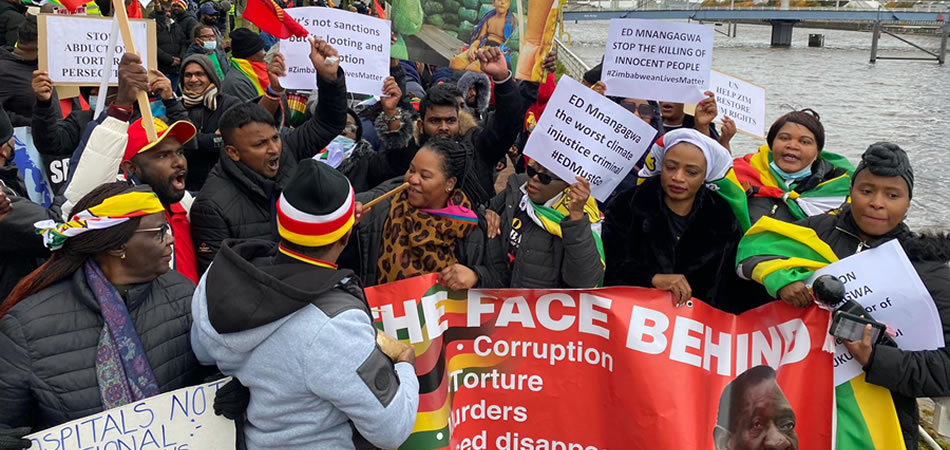
- Message: Participants are encouraged to carry placards with slogans like “45 Years, Still Nowhere,” “Independence for Who?” and “Walk for Freedom, Walk for Justice,” drawing attention to the disconnect between the promise of 1980 and the reality of 2025.
- Donations: Donations to support this campaign, of any amount can be made via this link {DONATION} or the QR Cash-Back PDF CLICK HERE.
This campaign builds on ZHRO’s legacy of endurance and activism. Since 2017, our “Walk for Freedom” has seen dedicated individuals brave long distances to spotlight issues like electoral fraud, maternal mortality, and the denial of diaspora voting rights (see more at ZHRO/15-105km-"Walks/45 for Freedom 2017- 2025"). The “Walk to Nowhere” takes this spirit further, using the symbolic power of 45 to confront the world with Zimbabwe’s plight.
A Global Movement
The beauty of this campaign lies in its accessibility. Whether you walk 45 miles or 45 kilometres, alone or in a group, in Zimbabwe or abroad, your steps will join a chorus of voices demanding change. For those unable to cover the full distance, shorter “solidarity walks” or virtual participation through social media (using hashtags like #WalkToNowhere and #Zim45) can amplify the message. Drumming, singing, and speeches—hallmarks of ZHRO’s past protests—will accompany the walks, turning them into vibrant demonstrations of resilience and hope.
In Zimbabwe, where protests are often met with violence, we urge participants to prioritize safety and adhere to local laws, while still making their voices heard. Abroad, the diaspora can use their freedom to speak louder, pressuring governments and international bodies to address Zimbabwe’s crisis.
Reflecting on 45 Years
As we walk, we reflect. ZIPRA and ZANLA fought for a Zimbabwe where every citizen could thrive, not just survive. Yet, 45 years later, the maternal mortality rate remains alarmingly high (462 deaths per 100,000 live births, according to WHO’s 2024 report), youth unemployment soars, and political dissent is crushed. The “Walk to Nowhere” is a call to reclaim the independence that was promised—a reminder that the struggle continues.
Join Us
From the 18th of April 2025 to 18th April 2026, let’s walk together—not to celebrate a hollow milestone, but to demand the Zimbabwe our forebears envisioned. Register your walk with ZHRO, organize locally, and spread the word. After 45 years of going nowhere, it’s time to chart a new path.
For more details, visit https://zhro.org.uk/45 or follow us on social media. Together, we walk for freedom, justice, and a future worth fighting for.
Youth Activism is Important
- Details
- Written by: Felistas and Felicia Munemo
- Hits: 59
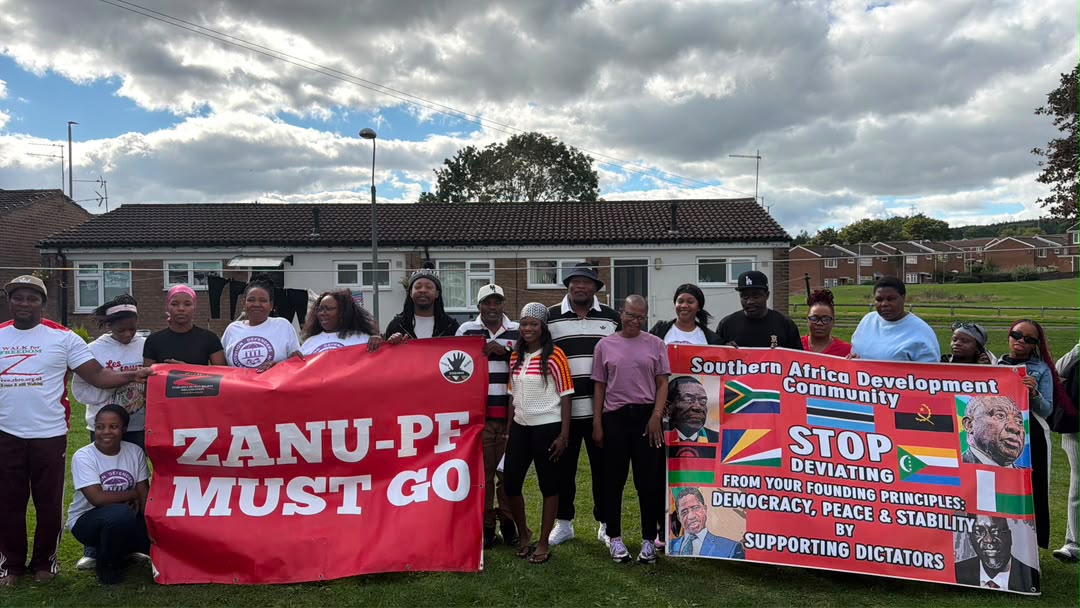 The Youth Must also be Activists
Know Your Politics:
Why Every Young Person Must Understand the System Before They Can Defend It.
There is a dangerous myth that politics is for old men in suits, for lawyers, for people with grey hair and long titles. Young people are told, directly or indirectly, to stay in their lane to focus on school, on hustling, on “apolitical” ambition. Meanwhile, the decisions that will shape the next fifty years of their lives are being made in parliaments, cabinets, and constitutional committees they were never taught to read.
This is not an accident. An uninformed youth is a convenient youth. A generation that does not know its constitution cannot tell when that constitution is being gutted. A generation that cannot name its representatives cannot hold them accountable. Silence is not neutrality it is surrender by default.
Democracy Dies Quietly, Not Loudly
Coups make headlines. But most erosions of democracy do not look like tanks in the street. They look like a clause quietly amended in a bill few people read. They look like an independent commission “restructured” until it has no teeth. They look like a chairperson removed through an administrative memo instead of due process. By the time the public notices, the damage is already law.
This is why civic literacy cannot be optional for young people. If you do not know what your constitution protects your right to assemble, to speak, to be governed by term limits, to have an independent judiciary you will not recognise the moment those protections are being dismantled in front of you.
What “Knowing Your Politics” Actually Means
It is not enough to know who the president is. Real political literacy means:
Page 47 of 51


