



Lest We Forget
- Details
- Written by: Senator Jameson Timba
- Hits: 194
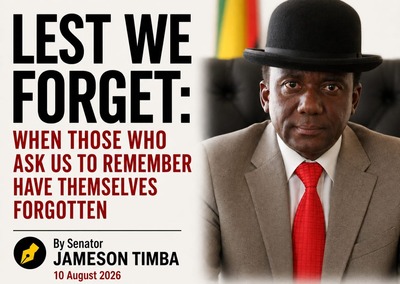 LEST WE FORGET: WHEN THOSE WHO ASK US TO REMEMBER HAVE THEMSELVES FORGOTTEN
10 August 2026
This year's National Heroes Day commemorations are being held under a particularly poignant theme:
“Lest We Forget.”
Those words are ordinarily an invitation to a nation to remember.
To remember the young men and women who abandoned schools, universities, jobs and families to join the liberation struggle. To remember those who crossed borders into uncertainty. To remember those who were imprisoned, tortured, maimed or killed. To remember those who lie in marked graves, unmarked graves and distant lands.
- But in Zimbabwe today, “Lest We Forget” carries a painful irony.
- Because the greatest danger confronting us is not that the people of Zimbabwe have forgotten.
- It is that those governing Zimbabwe appear to have forgotten.
- They have forgotten what the liberation struggle was about.
What Did They Fight For?
Our heroes did not fight merely to replace a white ruling elite with a black ruling elite.
Zimbassy - The Free Diaspora Embassy
- Details
- Written by: John Burke
- Hits: 239
 ZIMBASSY
The Embassy Zimbabweans Actually Trust
Every dictatorship needs an embassy. This one has a diaspora instead.
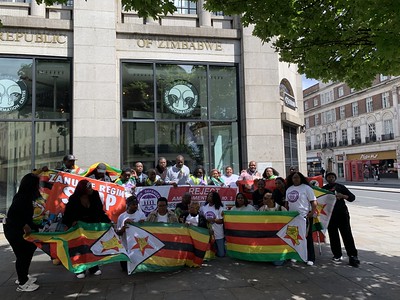
Walk past the Zimbabwean High Commission in any Western capital and you'll find a building. Flags, a crest, a reception desk. What you won't find is anyone inside who speaks for the millions of Zimbabweans who left because that government made staying impossible.
That's the gap ZIMBASSY fills.
Not a building. Not a bureaucracy. Not a single leader ZANU-PF's courts can capture, recall, or intimidate into silence — the way they gutted the CCC through the Tshabangu affair. ZIMBASSY is a distributed embassy: diaspora voices, documentation, and pressure, organised around the one thing Harare's embassies can never represent — the truth about what's happening back home.
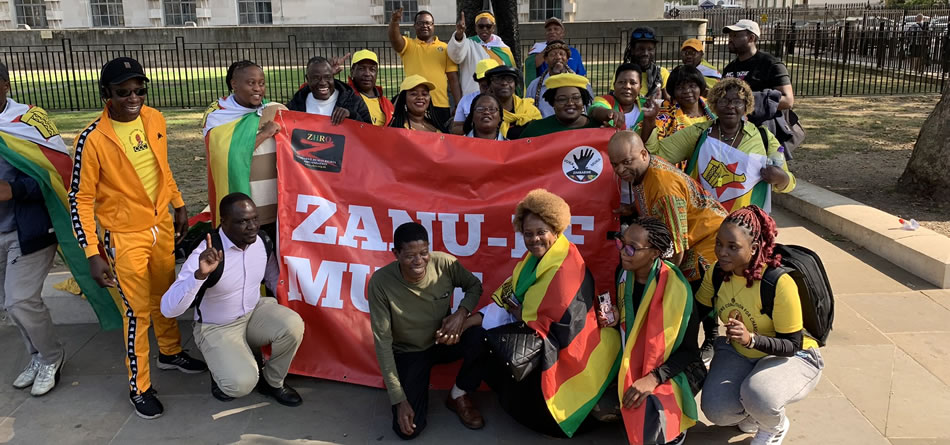
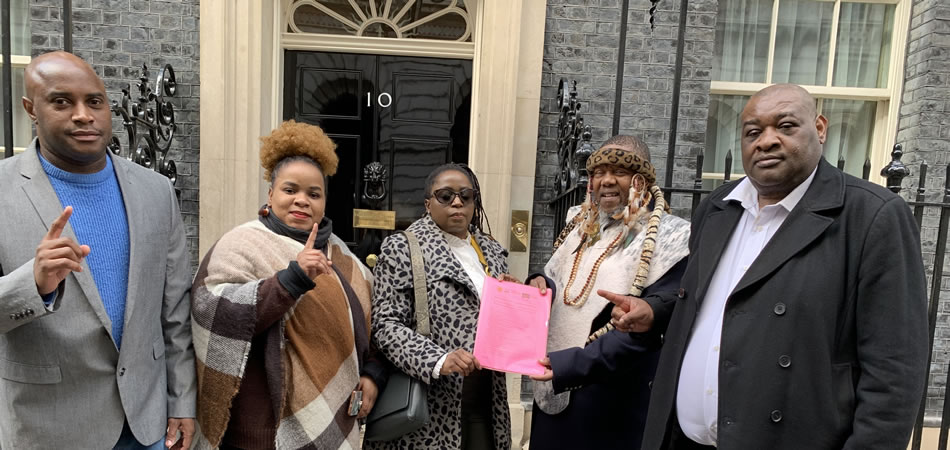
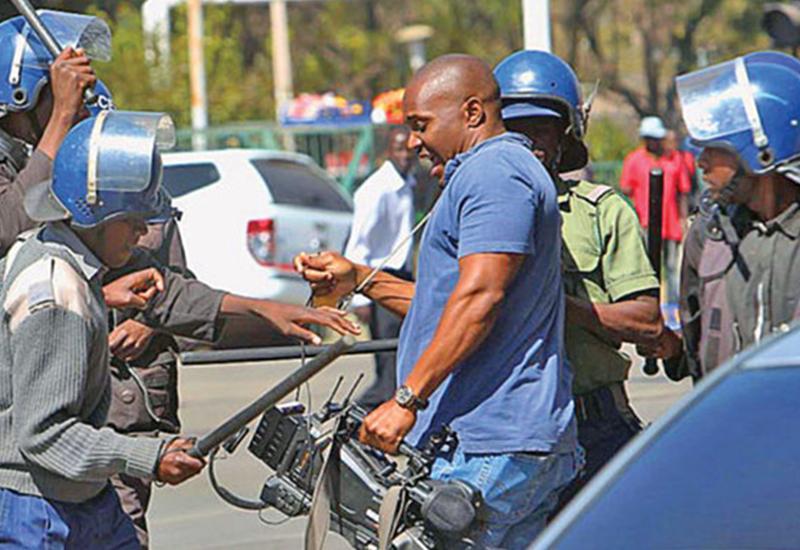
While the official embassies host garden parties for Zanu-PF loyalists and process land-allocation paperwork for the party faithful, ZIMBASSY has spent 2026 doing the actual work of representing Zimbabweans abroad: documenting CAB3, Zimbabwe's attempted constitutional power-grab; recording testimony from journalists harassed for reporting it; putting the UK Parliament's own criticism of the bill on the public record; and giving diaspora voices — from Downing Street protests to personal testimony — a platform the regime cannot switch off.
The diaspora sends home an estimated $2.4 billion a year — the single largest prop under Zimbabwe's economy. In return, the government that drove them out won't even guarantee them healthcare when they visit. ZIMBASSY exists because representation should not be conditional on remittances.
This is what an embassy looks like when it belongs to the people instead of the party.
Join ZIMBASSY. Because the real Zimbabwe didn't leave — it multiplied.
Handshake and a Placard
- Details
- Written by: John Burke
- Hits: 536
 A Handshake and a Placard:
ZANU PF's "Investment Forum" Meets the [real] Diaspora at 429 The Strand
By ZHRO / Constitution Defenders Forum / ROHR — London, 10 July 2026
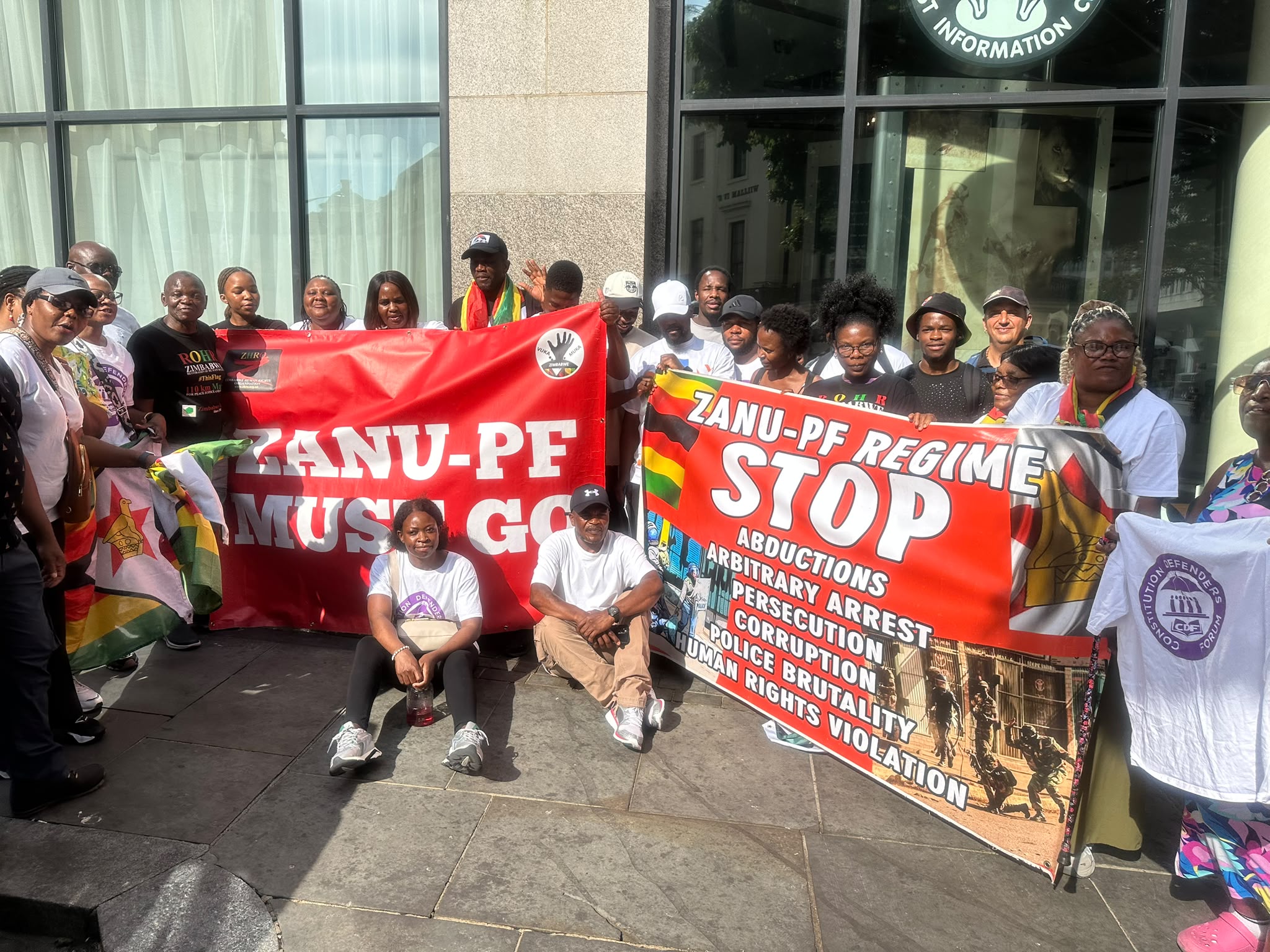
Three days after Emmerson Mnangagwa put his signature to the Constitution of Zimbabwe Amendment (No. 3) Act, the regime's embassy in London tried to sell investors on Zimbabwe. Outside, on the pavement, the diaspora explained why that pitch doesn't survive contact with the facts.
Two events, one address
Friday 10 July 2026 saw two things happen at 429 The Strand on the same afternoon, under the same roof, and neither made sense without the other.
Inside, the Zimbabwe Diaspora Business Forum – London, billed under the theme "Leveraging Diaspora Expertise for Sustainable Development" and fronted by the Financial Markets Indaba and CBZ Holdings, ran from 17:00 to 20:00. The invitation promised a "structured platform" connecting diaspora capital with Zimbabwe's "priority development projects."
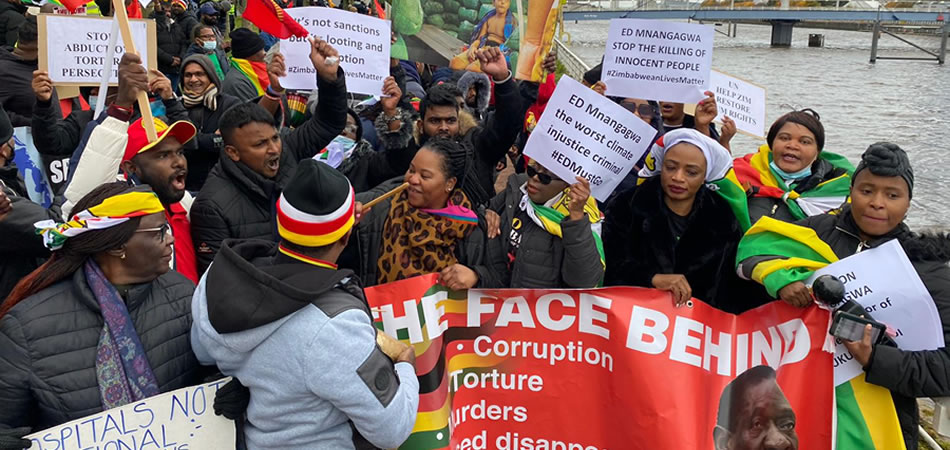
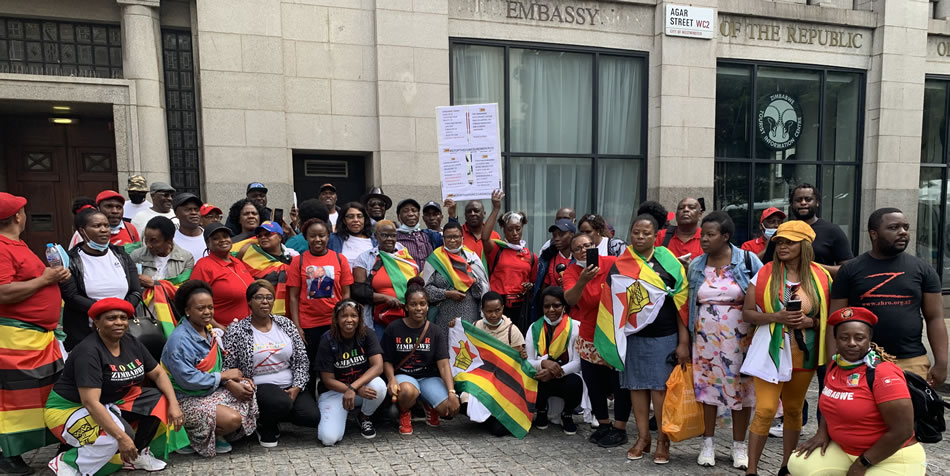
Outside, the Constitution Defenders Forum (CDF), the Zimbabwe Human Rights Organisation (ZHRO), ROHR Zimbabwe and allied diaspora groups gathered under banners reading "ZANU-PF REGIME MUST GO" and "ZANU-PF REGIME STOP: ABDUCTIONS, ARBITRARY ARREST, PERSECUTION, CORRUPTION, POLICE BRUTALITY, HUMAN RIGHTS VIOLATIONS." A Metropolitan Police Liaison Officer stood by, as he has done at every one of these demonstrations outside the embassy over the past eighteen months.
Manufactured Immunity
- Details
- Written by: John Burke
- Hits: 336
 MANUFACTURED IMMUNITY
How Zimbabwe's “Patriotic Act” Was Drafted to Never Touch the Hands That Wield It
A ZHRO Briefing Note on CAB3, the Criminal Law (Codification and Reform) Amendment Act, 2023, and the Politics of One-Way Accountability
Zimbabwe's Criminal Law (Codification and Reform) Amendment Act, 2023 — universally known as the “Patriotic Act” — was sold to the nation as a shield for sovereignty. It criminalises any citizen who, in the state's judgement, “wilfully injures the sovereignty and national interest of Zimbabwe,” with penalties that until a 2025 High Court ruling included death, life imprisonment, loss of citizenship, and a five-year ban from voting or holding office. Its architects insisted it existed to protect the constitutional order from subversion.
Constitutional Amendment Bill No. 3 (CAB3) now gives that claim its sharpest test. If the Patriotic Act genuinely exists to protect Zimbabwe's constitutional order from those who would “subvert, upset, overthrow or overturn” it, then a bill advanced through a manufactured, coercive, and internationally condemned “consultation” process — one that strips fixed presidential term limits, concentrates judicial appointments in the executive, and weakens independent electoral oversight — ought to be the single clearest case the Act was written to catch. It is not. And the reason why is the argument.
I. A Law Built With Only One Door
Read the Patriotic Act closely and a structural fact emerges: it has no clause, no offence, and no mechanism capable of being turned against the state itself. Section 22A criminalises a citizen who meets or communicates with a foreign government “with the aim of subverting, upsetting, overthrowing or overturning the constitutional government in Zimbabwe.” It criminalises advocacy for sanctions. It criminalises participation in international forums that embarrass the state. Every verb in the statute points outward, from the citizen toward the state, or from the diaspora toward Harare. None of them point back.
This is not an oversight. It is the design. A law intended even-handedly to protect “the constitutional order” from subversion, regardless of who does the subverting, would need to contemplate the possibility that subversion could originate from within government — from a ruling party using its parliamentary majority to rewrite the constitution it swore to uphold. The Patriotic Act contemplates no such thing. It was never drafted as a neutral guardian of constitutional order. It was drafted as a weapon with a single grip, shaped to fit only the hand of the state, and only ever swung outward.
- The political capture
- Observer Report - CDF Meeting UK
- SPECIAL REPORT Democracy Under Siege
- Democracy Under Siege
- Justice, Democracy, and a Referendum
- The Ramaphosa Farm Visit
- Zimbabwe’s Cry for Freedom Cannot Be Ignored
- 21st April 2026 - Petition Delivered
- 18th April 2026 - CAB3 Protest
- You Shall Not PASS - CAB3
Page 49 of 52


