


Interdependent System in Collapse
- Details
- Written by: John Burke
- Hits: 406
 ZIMBABWE'S CRITICAL INFRASTRUCTURE: A Single Interdependent System in Collapse
Electricity, Water and Sanitation — A Diagnostic Briefing
Prepared by Sun Earth Energy Ltd, in association with Urbium Research Ltd
https://sun-earth-energy.com | https://urbium.org | https://chp4.org
Executive Summary
This briefing sets out documented evidence that Zimbabwe's electricity, water and sanitation systems should be understood not as three separate crises but as a single interdependent infrastructure system in decline. Chronic underinvestment, deferred maintenance and the diversion of utility revenue — evidenced in the Auditor-General's own reporting — have left the national grid without the redundancy that modern power systems require, such that a single substation fault has, on more than one occasion, taken down supply across an entire city or the national network. The same pattern of deferred maintenance and diverted funds runs through Harare's water and sewage systems, sustaining a public-health risk that has already produced one of the worst cholera epidemics in African history and continues to generate outbreaks today. Because electricity, water treatment and sewage pumping are physically interdependent, the collapse of one system degrades the others in ways that compound rather than simply add up. This paper is diagnostic. It sets out the evidence and the mechanism of failure; it does not make recommendations for UK Government policy.
Senator Tshabangu's Threat Against Journalist Blessed Mhlanga
- Details
- Written by: Gladys Kajawo and Introduction/Background by AI
- Hits: 507
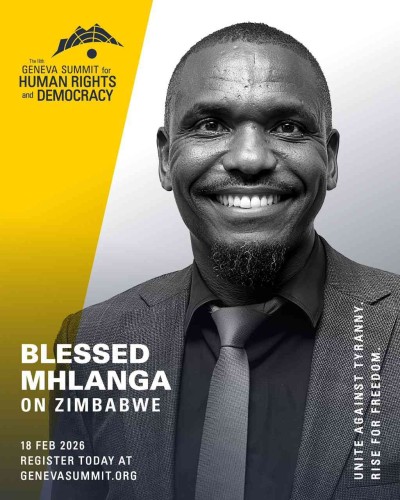 Senator Tshabangu's Threat Against Journalist Blessed Mhlanga
— February 2026
The Trigger: A Speech in Geneva
The immediate incident centres on journalist Blessed Mhlanga, a prominent digital editor and head of broadcasting for Alpha Media Holdings (AMH). Mhlanga participated as a panellist at the Geneva Summit for Human Rights and Democracy on 18 February 2026, where he delivered a scathing critique of the Zimbabwean government's human rights record and its systematic suppression of media freedom. My Zimbabwe News
In his speech, Mhlanga described Zimbabwe as a tyrannical state, saying: "This is the new face of repression in Zimbabwe, laced with sophistication. In the past, it was naked violence on the streets, abductions and forced disappearances. It has changed — it is now violence committed through the legal system, what I call 'lawfare'." Bulawayo24
Tshabangu's Threat
The response from Senator Tshabangu was swift and striking. Posting on X (formerly Twitter), Tshabangu labelled Mhlanga "unpatriotic" and wrote: "I listened to @bbmhlanga speaking at the Geneva Summit, and I was deeply moved by his remarks. As an opposition politician and a Senator in the Parliament of Zimbabwe, I will raise a motion in the Senate urging the Government to cancel his passport. Patriotism must be upheld."
Bulawayo24
This was notable because Tshabangu is nominally an opposition figure — the self-declared interim secretary-general of the Citizens Coalition for Change (CCC) — yet his threat aligned squarely with the ruling ZANU-PF government's response.
The Government Piles On
Tshabangu was not alone. After Mhlanga testified about repression and restrictions on media freedom, the state-owned newspaper The Herald published a statement by Information Minister Zhemu Soda condemning his remarks as "malicious" and warning that Zimbabwe's so-called "patriotic clauses" prohibit engagement with foreign entities in ways deemed harmful to the state. UN Watch
The Zimbabwe Republic Police's Law and Order section reportedly launched a high-powered operation to apprehend Mhlanga, My Zimbabwe News and according to media reports, counterintelligence teams were deployed to the airport as if he were a high-level security threat. Thezimbabwean
International Condemnation
The international response was swift. On 20 February 2026, the Geneva Summit for Human Rights and Democracy coalition called on the United Nations to take urgent action, and the coalition formally lodged a complaint with UN Secretary-General António Guterres. UN Watch Hillel Neuer, Executive Director of UN Watch, stated: "These are not abstract criticisms — they are threats of prosecution and restrictions on freedom of movement in retaliation for speaking at the United Nations," adding that "No journalist or human rights defender should face criminal charges or passport revocation for cooperating with the UN." My Zimbabwe News
Gladys Kajawo Reports - 20th February 2026
Recent remarks by Senator Sengezo Tshabangu threatening possible action against journalist Blessed Mhlanga have sparked more than a passing political controversy. They have reopened an enduring national debate about the strength — or fragility — of constitutional protections in Zimbabwe. At stake is not merely a disagreement between a politician and a journalist, but the credibility of the rule of law itself. In any democracy, words spoken by public officials carry institutional weight. When a senior political figure suggests that a citizen’s passport or legal standing could be affected by speech delivered abroad, the implication extends far beyond personal criticism. Such statements risk creating the impression that political authority may reach beyond constitutional limits — an impression that undermines public confidence in independent governance.
Zimbabwe’s Constitution guarantees freedom of expression and freedom of movement as fundamental rights. These protections exist precisely to shield citizens — including journalists — from retaliation linked to political speech. They are not privileges granted at the discretion of officeholders but legal safeguards meant to ensure equality before the law.
Read more: Senator Tshabangu's Threat Against Journalist Blessed Mhlanga
Constitutional Capture in Zimbabwe
- Details
- Written by: Blessing Tariro Makeyi
- Hits: 669
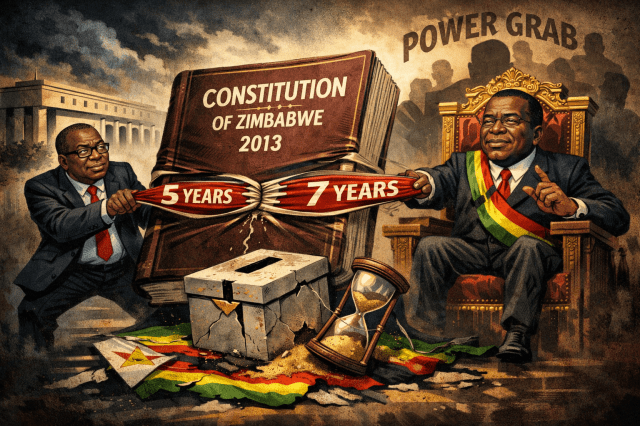 Constitutional Capture in Zimbabwe:
ZANU-PF's Manipulation of Legal Frameworks
Introduction
Constitutional capture refers to the process by which political actors manipulate constitutional and legal frameworks to consolidate power, undermine democratic institutions, and entrench authoritarian rule. In Zimbabwe, the Zimbabwe African National Union-Patriotic Front (ZANU-PF) has systematically employed constitutional capture since independence in 1980, transforming what should be a foundation for democratic governance into an instrument of political domination.
This document examines the mechanisms, evolution, and consequences of ZANU-PF's constitutional capture, analyzing how the party has manipulated successive constitutions to maintain its grip on power across more than four decades.
Historical Context: From Lancaster House to the 2013 Constitution
The Lancaster House Constitution (1980-2013)
Zimbabwe gained independence under the Lancaster House Constitution, a compromise document negotiated in London in 1979. While it included protections for white minority property rights and a brief period of reserved parliamentary seats for whites, it also provided Robert Mugabe and ZANU-PF with a constitutional framework they would later exploit. Key early manipulations included the constitutional amendments of the 1980s that removed reserved seats for whites, abolished the Senate, and critically, created an executive presidency with enhanced powers. The 1987 Unity Accord between ZANU and ZAPU consolidated single-party dominance, and the subsequent constitutional amendment that made Mugabe executive president concentrated unprecedented power in one office.
Failed Reform and the 2000 Constitutional Referendum
In 2000, ZANU-PF attempted to pass a new constitution that would have further entrenched presidential powers and provided legal cover for land seizures. However, the Movement for Democratic Change (MDC) led a successful campaign against the referendum, marking the first electoral defeat for ZANU-PF. This rejection did not deter the regime; instead, it accelerated extrajudicial land invasions and intensified political repression.
The 2013 Constitution: Promise and Betrayal
Blessing Geza - Friend or Foe
- Details
- Written by: Blessing Tariro Makeyi
- Hits: 1028
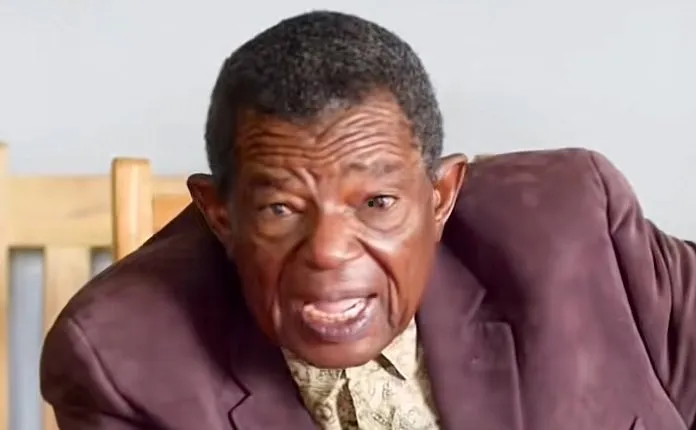 Blessing Geza (Cde Bombshell): Friend or Foe?
The death of Blessed Runesu Geza on February 6, 2026, has left Zimbabwe grappling with a question that refuses simple answers: was "Cde Bombshell" a courageous truth-teller who found his moral compass in his final days, or an opportunistic insider attempting to rewrite his own compromised history? The answer, perhaps unsatisfyingly, is that he may have been both.
The Insider Who Turned Outward
For decades, Blessing Geza was a man of the system. A liberation war veteran who fought in ZANLA during Zimbabwe's struggle for independence, he transitioned seamlessly into the post-colonial establishment. Rising through ZANU-PF ranks to the Central Committee, allegedly serving in the Central Intelligence Organisation, and playing a role in the 2017 military intervention that removed Robert Mugabe, Geza was no stranger to the corridors of power.
Yet in February 2025, this same insider became the state's most vocal critic. Through broadcasts on Heart & Soul TV, he leveled devastating accusations against President Emmerson Mnangagwa and his inner circle: industrial-scale corruption, involvement in the alleged 2020 poisoning of Vice President Constantino Chiwenga, economic monopolization by connected businessmen like Kudakwashe Tagwirei and Wicknell Chivayo, and the betrayal of liberation ideals.
The specificity of his allegations suggested insider knowledge. The vehemence of his delivery earned him the moniker "Cde Bombshell." But the timing raised uncomfortable questions.
The Deathbed Convert?
Here lies the central tension in evaluating Geza's legacy. Medical sources indicated that doctors had told him months before his activism began that he was dying of cancer. He only revealed this publicly in his final letter, hours before his death in a South African cardiac hospital.
Critics argue this timing is damning. Where was this moral outrage during his years benefiting from the system
Page 19 of 51


